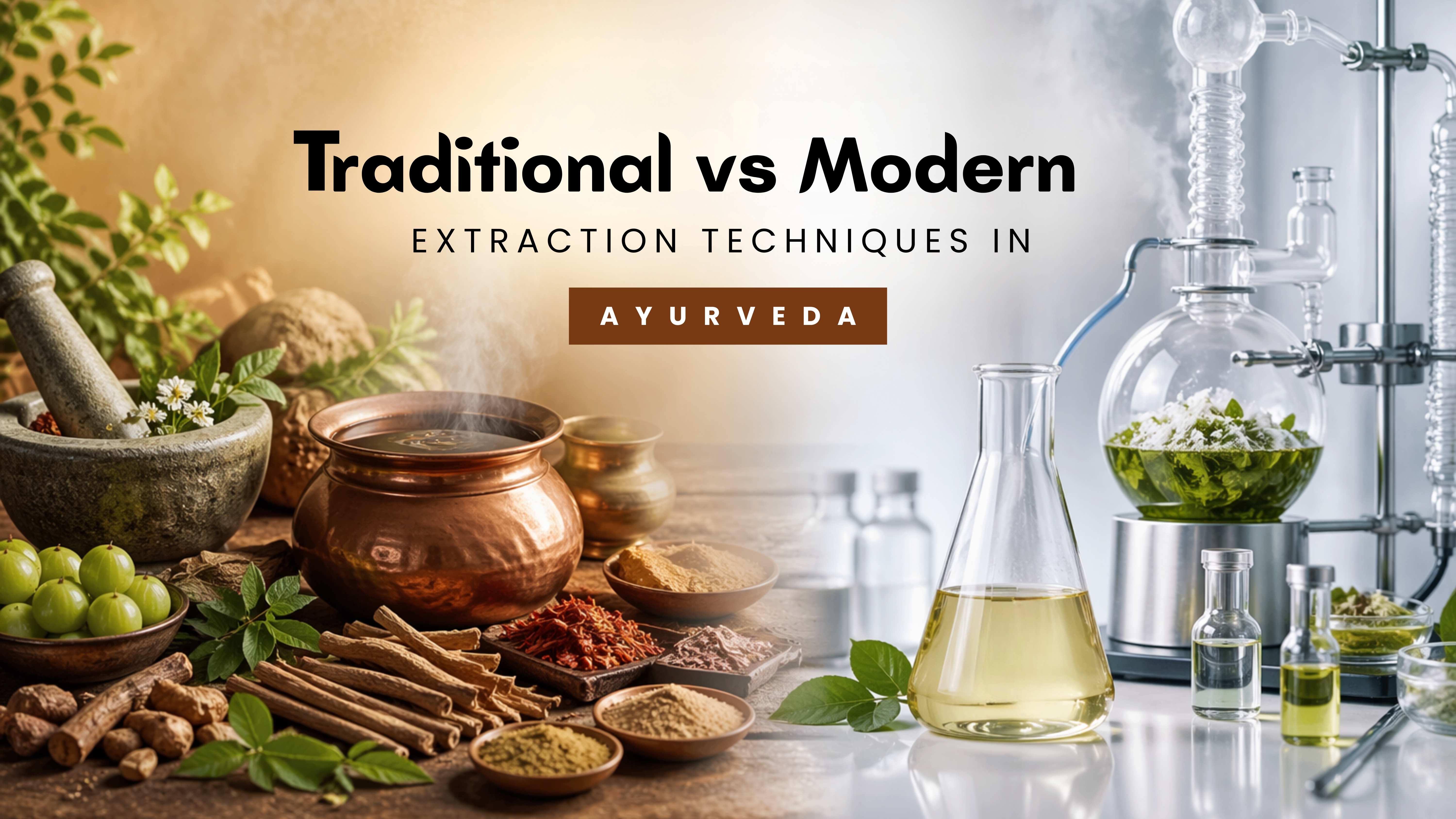
Traditional vs Modern Extraction Techniques in Ayurveda
Understanding Extraction in Ayurvedic Manufacturing | Traditional Extraction Techniques in Ayurveda |Decoction (Kwath Method) |Infusion (Phanta Method) | Oil Infusion (Taila Preparation) | Fermentation (Asava & Arishta) |The Ayurvedic industry is built on the foundation of herbs, roots, flowers, and natural activities that have been used for centuries to promote healing and wellness. However, what truly determines the effectiveness of any Ayurvedic product is not just the ingredient itself, but how its active compounds are extracted. Extraction is the bridge between raw herbs and functional formulations, it is the step where nature is transformed into a usable, potent, and stable ingredient.
As the demand for high-performance Ayurvedic products grows globally, the debate between traditional and modern extraction techniques has become increasingly important. From a manufacturer’s perspective, choosing the right extraction method directly impacts product efficacy, stability, shelf life, and scalability. A reliable Ayurvedic manufacturer in India must carefully evaluate both traditional wisdom and modern science to create formulations that meet today’s expectations.
Today, brands looking for a reliable Certified Ayurvedic Manufacturer India also evaluate the manufacturer's expertise in Ayurvedic Extraction Techniques, because extraction quality directly influences ingredient potency, formulation stability, product efficacy, and overall consumer satisfaction. Advanced extraction methods have become one of the biggest differentiators in modern Ayurvedic product manufacturing.
This is why brands increasingly focus on selecting the right Ayurvedic manufacturing partner to ensure extraction quality and formulation consistency.
At Aadhunik Ayurveda, we believe that the future of Ayurvedic manufacturing lies in balancing these two approaches, honoring traditional extraction methods while leveraging modern technologies to enhance performance and consistency.
Understanding Extraction in Ayurvedic Manufacturing
Extraction is the process of isolating bioactive compounds from herbs so they can be used effectively in formulations. A professional Ayurvedic skincare manufacturer India understands that extraction is not a one-size-fits-all process. Different herbs require different techniques to preserve their therapeutic properties.
From a manufacturer’s standpoint, extraction must achieve three key goals: preserving the integrity of the herb, maximizing the availability of active compounds, and ensuring stability in the final product. At Aadhunik Ayurveda, our R&D team carefully selects extraction methods based on the nature of the ingredient and the intended application.
Extraction quality ultimately depends on the manufacturer’s expertise, infrastructure, and ability to control processing conditions at every stage.”
For every Ayurvedic Skincare Manufacturer India, the selection of the right Herbal Extraction Process is one of the most critical formulation decisions. Different botanicals release their active compounds differently, making extraction science an essential part of creating high-performance Ayurvedic skincare, haircare, and wellness products.
Traditional Extraction Techniques in Ayurveda
Traditional extraction methods have been used for centuries and are deeply rooted in Ayurvedic principles. These methods focus on preserving the natural balance of the herb and maintaining its holistic properties.
Traditional Ayurvedic extraction methods continue to inspire modern formulation science because they preserve the natural synergy of herbs rather than isolating individual compounds. Many consumers actively seek products developed using Traditional Ayurvedic Extraction Methods due to their holistic approach toward skin and wellness benefits.
Decoction (Kwath Method)
One of the oldest and most widely used techniques is decoction, where herbs are boiled in water to extract their active compounds. A reliable herbal product manufacturer India often uses this method for preparing classical Ayurvedic formulations.
These traditional extraction approaches are still widely used in phytochemical processing and herbal ingredient development.
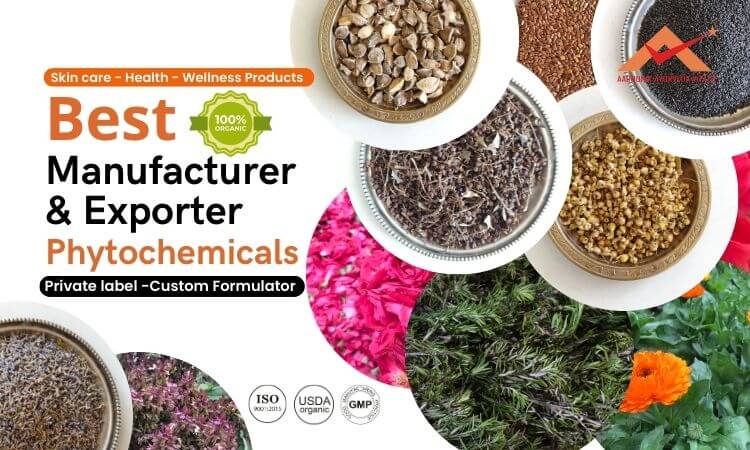
From a manufacturer’s perspective, decoction is effective for extracting water-soluble compounds. However, it requires careful control of temperature and time to avoid degradation of sensitive nutrients.
Infusion (Phanta Method)
Infusion involves soaking herbs in hot water, similar to making herbal tea. This method is gentler than decoction and is used for delicate herbs.
Infusion-based extraction is commonly used in herbal beverages and functional wellness formulations.

From an Ayurvedic manufacturer in India standpoint, infusion helps preserve volatile compounds but may not extract deeper actives effectively.
Oil Infusion (Taila Preparation)
In this method, herbs are infused into oils through slow heating. This technique is widely used in Ayurvedic oils and skincare formulations.
From a manufacturer’s perspective, oil infusion allows fat-soluble compounds to be extracted, making it ideal for therapeutic oils and topical applications.
This method forms the foundation of herb-infused oil manufacturing used in both skincare and therapeutic formulations.

Fermentation (Asava & Arishta)
Fermentation is used to create Ayurvedic tonics where herbs are naturally fermented to enhance their potency.
From a Ayurvedic third party manufacturer India perspective, fermentation increases bioavailability but requires strict quality control.
Today, fermentation is also widely used in advanced skincare to enhance ingredient absorption and bioavailability.
Steam Distillation
Steam distillation is a traditional yet technically refined method used to extract essential oils and volatile compounds from herbs and flowers. In this process, steam passes through plant material, carrying essential oils which are then condensed and separated. From a manufacturer’s perspective, this method is highly effective for preserving aromatic and therapeutic compounds without degrading them through direct heat.
This technique is commonly used in the production of hydrosols and botanical distillates for skincare and wellness products.
Today, Steam Distillation in Ayurveda is widely adopted for producing premium essential oils, floral waters, herbal hydrosols, and aromatic botanical extracts used in luxury skincare and wellness formulations.

Sieving (Chhalni Process)
Sieving is a fundamental post-processing technique used to separate fine herbal powders from coarse particles. In Ayurvedic manufacturing, it ensures uniform particle size, which improves formulation consistency and absorption. From a manufacturer’s standpoint, proper sieving enhances product quality, especially in churnas and powdered formulations.
Stone Mill Grinding (Traditional Chakki Grinding)
Stone mill grinding is a traditional method where herbs are slowly ground between natural stone surfaces to retain their nutritional and therapeutic value. Unlike high-speed modern grinders, this process generates minimal heat, preserving sensitive active compounds. From a manufacturer’s perspective, this method is ideal for maintaining the wholesomeness of herbal powders.
Limitations of Traditional Extraction Methods
While traditional methods offer authenticity and holistic benefits, they also come with limitations. From a manufacturer’s perspective, these include:
- Lack of standardization
- Short shelf life
- Limited scalability
- Variability in potency
This is where modern extraction techniques play a crucial role.
Modern Extraction Techniques in Ayurveda
Modern extraction methods use advanced technology to improve efficiency, consistency, and stability. A professional cosmetic manufacturer India integrates these techniques to meet global standards.
Cold Press Extraction
Commonly used for oils, this method extracts activities without heat, preserving nutrients.
Cold-pressed extraction is widely used in premium oil manufacturing to retain maximum nutritional value and purity.
The popularity of Cold Pressed Herbal Extraction continues to grow because it preserves heat-sensitive vitamins, antioxidants, and fatty acids without compromising ingredient integrity. Premium facial oils and herbal serums often rely on this extraction method for superior quality.

At Aadhunik Ayurveda, we use cold pressing to maintain the purity and effectiveness of oils.
The Hybrid Approach: Best of Both Worlds
At Aadhunik Ayurveda, we believe in combining traditional and modern extraction techniques to create high-performance products.
This hybrid approach allows us to preserve the holistic benefits of traditional methods while ensuring the consistency, stability, and scalability offered by modern technology.
For example, we may use traditional oil infusion for authenticity and modern extraction for enhancing active concentration.
Role of R&D in Extraction Techniques
A reliable Ayurvedic manufacturer in India must invest in R&D to optimize extraction methods.
Advanced R&D also includes stability testing and formulation validation to ensure long-term product performance.
From a manufacturer’s perspective, R&D helps in:
- Identifying the best extraction method
- Enhancing bioavailability
- Ensuring product stability
- Reducing production costs
At Aadhunik Ayurveda, our R&D team continuously works on improving extraction processes to deliver superior products.
Continuous investment in R&D also enables manufacturers to optimize Botanical Extraction Methods, improve bioavailability, validate ingredient stability, and support innovation across modern Ayurvedic skincare and wellness formulations.

Challenges in Extraction and How We Solve Them
Extraction comes with challenges such as loss of potency, contamination, and inconsistency.
These challenges highlight the importance of controlled manufacturing environments and validated testing protocols.
At Aadhunik Ayurveda, we address these challenges through:
- Advanced quality control systems
- Controlled processing environments
- Continuous testing and validation
An experienced Private Label Ayurvedic Manufacturer must also ensure batch-to-batch consistency through validated extraction protocols, standardized ingredient testing, and robust quality assurance systems that comply with international manufacturing standards.
Why Aadhunik Ayurveda Leads in Extraction Excellence
As a leading Ayurvedic manufacturer in India, Aadhunik Ayurveda combines traditional knowledge with modern innovation.
We focus on:
- High-quality ingredient sourcing
- Advanced extraction technologies
- Strong R&D capabilities
- Global compliance standards
As a GMP Certified Ayurvedic Manufacturer, Aadhunik Ayurveda integrates advanced laboratory validation, modern extraction equipment, traditional Ayurvedic expertise, and scientific formulation strategies to deliver globally competitive herbal products.
Whether developing skincare, haircare, personal care, or wellness products, choosing an experienced Herbal Extract Manufacturer India ensures that every botanical ingredient retains its maximum functional value throughout the Ayurvedic Product Manufacturing Process, ultimately resulting in safer, more effective, and market-ready formulations.
Conclusion
The debate between traditional and modern extraction techniques is not about choosing one over the other, it is about finding the right balance. Traditional methods offer authenticity and holistic benefits, while modern techniques provide consistency, efficiency, and scalability.
By combining both approaches, manufacturers like Aadhunik Ayurveda can create products that are both effective and aligned with modern consumer expectations.
Partner with a leading Private Label Ayurvedic Manufacturer that combines Modern Herbal Extraction Technology with authentic Ayurvedic wisdom to create premium-quality products for domestic and international markets.
CTA
Create High-Performance Ayurvedic Products with Advanced Extraction
Ready to develop powerful Ayurvedic formulations?
Partner with Aadhunik Ayurveda, a trusted Ayurvedic manufacturer in India, and leverage the perfect blend of traditional wisdom and modern extraction technology.
What You Get:
- Advanced extraction techniques
- Strong R&D support
- High-quality ingredient sourcing
- Custom formulation development
- Export-ready products
Start your product development journey today with Aadhunik Ayurveda.
FAQs:
What is the best extraction method in Ayurveda?
There is no single best method, it depends on the herb and product type.
Are traditional extraction methods better?
They offer authenticity but may lack stability and scalability.
Why are modern extraction techniques used?
They ensure consistency, efficiency, and longer shelf life.
What is the hybrid extraction approach?
It combines traditional and modern methods for optimal results.
How does extraction impact product quality?
It directly affects potency, stability, and effectiveness.
Why choose Aadhunik Ayurveda?
Because we combine traditional knowledge with advanced technology to deliver high-quality products.
Why are Ayurvedic extraction techniques important in product manufacturing?
Ayurvedic Extraction Techniques play a crucial role in preserving the therapeutic properties of herbs. The right extraction method helps maintain ingredient potency, improves formulation stability, enhances product efficacy, and ensures consistent quality across every production batch.
How does a GMP Certified Ayurvedic Manufacturer ensure extraction quality?
A GMP Certified Ayurvedic Manufacturer follows standardized extraction protocols, validated quality control procedures, laboratory testing, and scientific manufacturing practices to ensure that every herbal extract meets high standards of purity, safety, consistency, and performance for commercial production.