Most Common Mistakes New Founders Make in Formulation Decisions – A Manufacturer’s Perspective
And this is where most new founders make their first big mistakes. | Understanding the Foundation of Skincare Formulation | Mistake 1: Using Too Many Active Ingredients | Why Founders Make This Mistake | Mistake 2: Choosing the Wrong Preservatives | Mistake 3: Unrealistic Product ClaimsWalk into any cosmetic manufacturing unit, like ours at Aadhunik Ayurveda, and you’ll find one thing in common: new skincare founders arriving with excitement in their eyes, ideas in their notebooks, and Pinterest screenshots full of “dream formulations.” Their passion is beautiful, but what we see every day is this, most of them step into the world of formulation without understanding how much science, safety, and precision is required to build a truly stable and effective product.
This is why “skincare formulation mistakes” and “private label skincare manufacturer guidance” are among the most searched topics for new beauty entrepreneurs today.
From outside, skincare formulation looks glamorous: choose a few actives, mix with botanical extracts, add a nice fragrance, and you have a bestselling serum. But inside the manufacturing space, formulation is a deeply technical journey. It is chemistry, microbiology, regulatory compliance, safety compatibility, pH balancing, stability prediction, and ingredient behaviour, all happening simultaneously.
Modern “cosmetic formulation process” involves scientific validation, which is critical for brands aiming for long-term success in the skincare industry.
And this is where most new founders make their first big mistakes.
As manufacturers, we don’t just make products, we guide founders, help them avoid expensive errors, and ensure that every formulation meets scientific, regulatory, and market standards. Our responsibility is not just to produce but to protect the brand before it even reaches the market.

Working with a “GMP certified skincare manufacturer” ensures that formulation decisions are safe, compliant, and scalable.
Understanding the Foundation of Skincare Formulation
Before discussing mistakes, we must understand what formulation truly means from a manufacturer’s lens.
Formulation is not mixing ingredients, it is creating a scientifically balanced product where each ingredient must serve a purpose. The texture, feel, absorption, performance, stability, and skin safety of your product depend on how smartly the formulation is created.
This is where “custom skincare formulation services” help brands build performance-driven and stable products.
A formulation is built around:
- pH stability
- Ingredient compatibility
- Preservation system
- Sensory experience
- Packaging suitability
- Long-term stability
New founders often underestimate this complexity.
This is where cosmetic formulation guidance from a professional manufacturer becomes extremely important. When founders skip this foundation, they fall into the trap of unnecessary trends, social media misinformation, and costly experiment cycles.
“Skincare product development process” requires expert-led planning rather than DIY experimentation.
- Formulation must consider pH, stability, and safety, not just active percentages.
- Every ingredient must have a reason to exist in the formula.
- Overloading formulas increases cost without increasing results.

Mistake 1: Using Too Many Active Ingredients
One of the biggest skin care formulation mistakes we notice is the obsession with actives. Many founders believe that more actives = better performance. This is far from true.
Search trends like “best active ingredients for skincare” often mislead founders into overloading formulations.
Actives like niacinamide, vitamin C, hyaluronic acid, AHAs, BHAs, peptides, ceramides, botanical extracts, retinoids, etc., all work beautifully when used correctly. But stacking them together is not a shortcut to performance.
Balanced “active-based skincare formulations” perform better than overloaded products in real-world usage.
Why Founders Make This Mistake
Because social media glorifies “10% of this + 5% of that + 2% of everything.” But formulas don’t work like fruit salads.
Manufacturer Reality
Too many actives:
- destabilise emulsions
- alter pH
- create irritation
- overpower preservative systems
- reduce product shelf life
At Aadhunik Ayurveda, we often have to reduce actives to make formulas stable and sensorially beautiful. A balanced formula always performs better than a crowded one plus a researched combinations is the key to long term success of each formula. Every ingredient is promising but when ingredients come together, how well each behave in concoction makes all the difference. This is why skincare startup mistakes become costly when founders chase trends without science.
- Too many actives can deactivate each other.
- Over-active formulas trigger redness, irritation, and barrier damage.
- Simple, targeted formulas deliver better long-term results.
Mistake 2: Choosing the Wrong Preservatives
This is one of the most dangerous mistakes.
In the natural skincare space, founders often believe preservatives are harmful—which is untrue. A preservative-free formula in water-based products is a breeding ground for bacteria, fungi, and mold.
“Preservative system in cosmetics” is essential for preventing microbial contamination and ensuring product safety.
As a private label skincare manufacturer, we perform microbial challenge tests for every formula.

Microbial testing in skincare manufacturing” is a critical step in safe product development.
Founders are often shocked to see how quickly microbes grow in preservative-free formulations.
Common Founder Errors
- Choosing “natural preservatives” without understanding their limitations
- Assuming oils don’t need antioxidants
- Picking preservatives unsuitable for pH, temperature, or product type
- Believing misinformation from blogs and influencers
Manufacturer Insight
There is no universal preservative.
The preservative must match:
- the pH of the formula
- solubility in oil or water
- type of formula (gel, cream, mist, serum)
- presence of actives
- packaging type
This is where professional Aadhunik Ayurveda manufacturer guidance prevents dangerous outcomes.
- Wrong preservatives lead to microbial contamination.
- Some preservatives don’t work in natural emulsions.
- Preservatives must be selected scientifically, not emotionally.
Mistake 3: Unrealistic Product Claims
New founders often want “instant results,” “permanent glow,” or “100% fairness.” These claims are illegal, unethical, and scientifically impossible.
Keywords like “skincare product claims compliance” highlight the importance of legal and ethical marketing.
Misleading claims violate Indian cosmetic rules, FDA/MOCRA standards, and global guidelines and ofcourse hurt sentiments.
As a manufacturer, we cannot accept unrealistic claims because they put both the brand and consumer safety at risk.
Common Unrealistic Claims
- Instant acne removal
- 100% scar removal
- Pore shrinking
- Zero-aging
- Permanent skin tone changes
- Guaranteed “overnight transformation”
Real claims require:
- ingredient efficacy studies
- dermatological references
- consumer study data
- lab test reports
Ethical claims build trust. Unrealistic claims build short-term hype but long-term failure.
“Honest skincare marketing” is now a major ranking factor for consumer trust and SEO visibility.
Skincare startup mistakes become a reality when founders write claims without scientific backing.
- Claims must be honest, legal, and science-backed.
- Overpromising damages brand credibility.
- Ethical claims convert one-time buyers into lifetime users.
Mistake 4: Ignoring pH Balance & Skin Barrier Safety
pH decides whether your formula is:
- Effective
- Safe
- Stable
- long-lasting
“pH balanced skincare products” are among the most searched terms for sensitive skin consumers.

Ignoring pH is a major skin care formulation mistake.
Every ingredient works within a specific pH range. Vitamin C (L-Ascorbic Acid) needs low pH. Niacinamide works better in moderate pH. AHAs require acidic conditions. Preservatives also depend on pH to function.
Why This Mistake Happens
Founders often copy DIY or Pinterest recipes and seek help from chatgpt. But skin-friendly products require lab-tested pH adjustments to avoid irritation or barrier damage.
Manufacturer Reality
We conduct pH testing at every stage:
- after emulsification
- after cooling
- after adding actives
- after packaging
If pH is wrong, even the best ingredients fail.
- Wrong pH causes burning, irritation, and sensitivity.
- pH affects preservative performance.
- Stability and feel depend heavily on correct pH.
Mistake 5: Copying Viral or Trending Formulas
Today’s skincare market is heavily influenced by viral trends, DIY vitamin C, turmeric masks, overnight peeling serums, 10% retinoid creams, and more. New founders often come to us with screenshots from Instagram or YouTube asking, “Can we make this exact formula?”
“Trending skincare formulations” often lack scientific validation and long-term stability.
Viral formulas are rarely scientifically compatible, scalable, or even safe. And most of them portray recipes as 100% natural absolutely free from preservatives and emulsions as they would just highlight natural and hide rest.
Most viral recipes lack:
- emulsion stability
- preservative balance
- pH optimization
- ingredient compatibility
- consumer safety standards
Formulas that look good on social media may fail instantly during real-world testing. This is why relying on trends becomes one of the biggest skincare startup mistakes.
Real Manufacturer Insights
We frequently see:
- Recipes that separate within 24 hours
- Actives oxidising quickly
- Essential oils added in excess
- Ingredients that degrade under heat
- No preservative or wrong preservative
A successful brand is not built on trends, it is built on stability, safety, and differentiation.
- Trend-based formulas often lack longevity.
- DIY formulas are not legally compliant or stable.
- Market trends should inspire, not dictate formulations.
Mistake 6: Neglecting Compatibility Between Ingredients
Ingredient compatibility is the backbone of formulation safety and performance.
“Ingredient compatibility in skincare formulation” is crucial for avoiding product instability and failures.
This is where founders struggle the most.
They often combine ingredients that neutralize, oxidize, curdle, or separate when mixed together.
This happens because many do not understand solubility, emulsifier systems, actives’ stability, or ingredient behaviour under heat and shear.
This is a strong reason why working with a professional private label skincare manufacturer becomes essential.
Common Compatibility Mistakes
- Mixing AHAs with retinoids
- Combining niacinamide with low-pH vitamin C
- Adding oils that oxidize quickly
- Using botanical extracts incompatible with emulsifiers
- Combining polymers and surfactants that repel each other
Manufacturer Reality
In our labs at Aadhunik Ayurveda:
- Every single ingredient is tested with the formula.
- We check for separation, color change, odor change.
- We monitor stability over 45–90 days.
Compatibility testing prevents major product failures and unnecessary reformulation cycles.
- Incompatible ingredients cause separation and instability.
- Some oils increase oxidation and reduce shelf life.
- Actives can cancel each other out chemically.
Mistake 7: Confusing Fragrance with Essential Oils
Many new founders believe:
“Fragrances are harmful.Essential oils are safer.”
But both can irritate skin if not used correctly.
Essential oils are powerful, volatile plant concentrates.
Fragrances, whether natural, natural-identical, or synthetic, must follow IFRA safety levels.
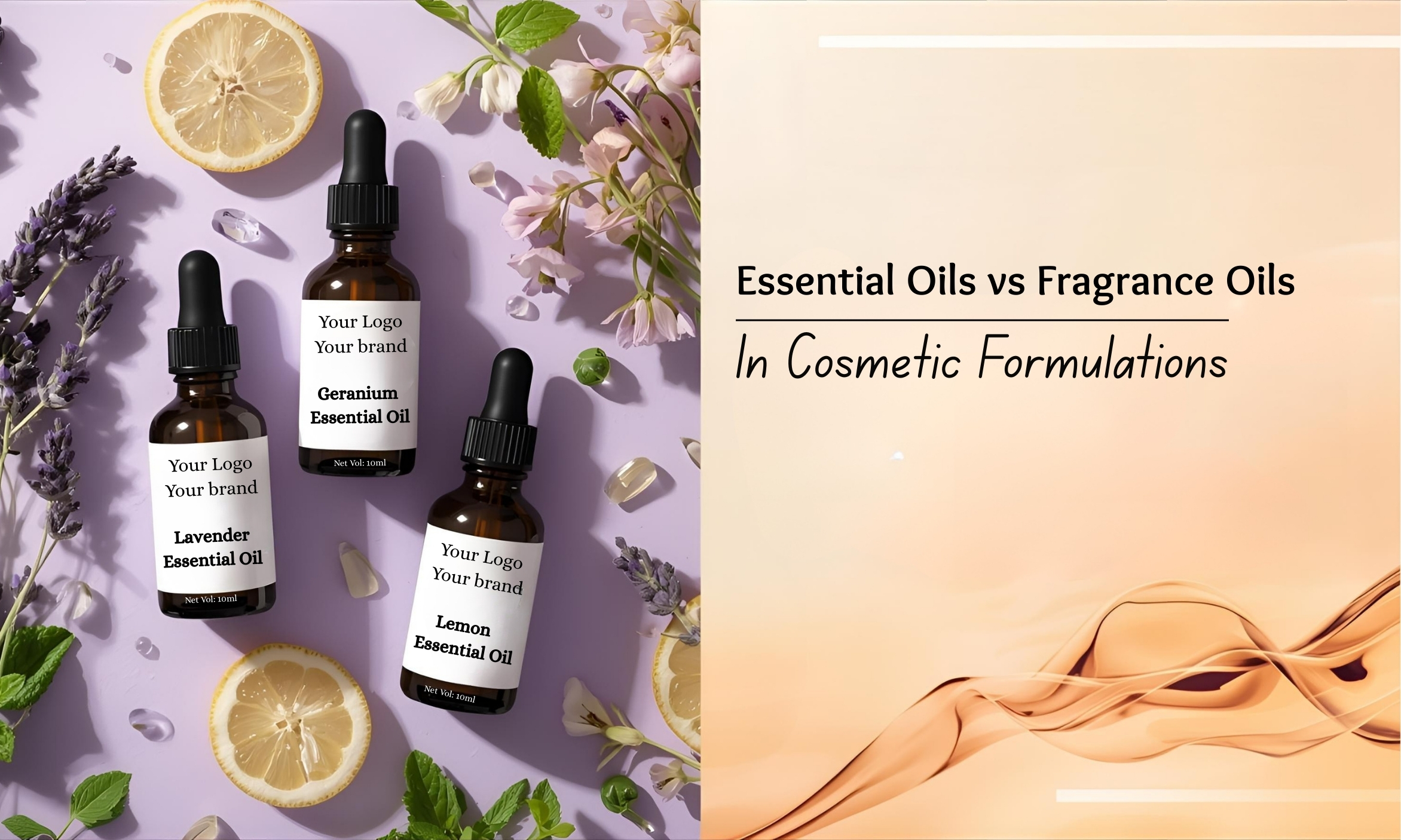
Misunderstanding this is one of the most common skin care formulation mistakes.
Common Errors
- Adding too many essential oils “for benefits”
- Using phototoxic essential oils like bergamot incorrectly
- Choosing fragrance oils incompatible with preservation
- Adding scent at the wrong temperature, causing evaporation
We guide founders to:
- Use essential oils within dermal limits
- Select IFRA-certified fragrances
- Choose skin-safe, hypoallergenic options
- Balance aroma with skin safety
Fragrance must be chosen with scientific precision—not emotional preference.
- Essential oils must follow strict dermal usage guidelines.
- Fragrances may impact preservation and stability.
- Natural is not automatically irritation-free.
Mistake 8: Ignoring Stability & Compatibility Testing
This mistake alone can destroy a brand.

“Stability testing in cosmetic products” ensures shelf life, safety, and performance.
Founders often believe that if a product “looks fine” after mixing, it is stable. But stability is a long, scientific process.
As a private label skincare manufacturer, we conduct stability testing for all formulas, especially natural and active-loaded products.
Types of Stability Tests We Perform
- Temperature testing (4°C, 25°C, 45°C, 55°C)
- Freeze–thaw cycling
- Humidity chamber testing
- Light exposure testing
- Packaging compatibility
- Viscosity and pH change monitoring
- Microbial workload testing
Why Founders Skip This Step
- They are unaware of scientific requirements
- They are in a rush to launch
- They don’t want to invest in testing
- They assume natural = safe
Skipping stability testing leads to:
- mold growth
- odor change
- separation
- color change
- inactive actives
- unsafe products
This is a serious skincare startup mistake that can damage brand trust.
- Stability testing prevents product failures.
- Packaging may react with the formula.
- Temperature and time reveal hidden formulation issues.
Mistake 9: Choosing Wrong Packaging for the Formula
Packaging is not just aesthetics—it is chemistry.
“Cosmetic packaging compatibility” directly impacts product stability and shelf life.
New founders often choose packaging based on how beautiful it looks on Instagram. But the right packaging depends on the formula’s:
- viscosity
- sensitivity to light
- sensitivity to oxygen
- compatibility with plastics/metals
- Essential oils concentration
Examples of Founder Mistakes
- Using transparent bottles for vitamin C
- Using dropper bottles for thick serums
- Using metal caps with acidic formulas
- Storing essential-oil-rich products in poor-quality plastic
- Choosing glass for shower products (breakage hazard)
Manufacturer Experience
We test packaging for:
- leaching
- discoloration
- cracking
- aroma absorption
- oxidation
- leakage
This is why expert cosmetic formulation guidance is necessary during packaging selection.
- Wrong packaging compromises the formula’s safety and stability.
- Light-sensitive products must use amber, frosted, or opaque bottles.
- Packaging must match viscosity, pH, and preservation needs.
Mistake 10: Not Understanding Manufacturing Limitations
New founders often assume manufacturers can create anything instantly. “Bulk skincare manufacturing process” involves timelines, sourcing, and compliance requirements. But real-world manufacturing includes:
- ingredient availability
- sourcing delays
- minimum order quantities
- stability timelines
- regulatory approvals
- production cycles
Founders sometimes demand:
- 50 ingredients in 1 serum
- Preservative-free creams
- 100% natural products with 2-year shelf life
- Overnight R & D turnaround
- 100 SKUs in one month
This is not possible.
Good formulas take time.
We don’t rush because:
- safety matters
- stability matters
- accuracy matters
- legal compliance matters
This is why working with an experienced Aadhunik Ayurveda manufacturer ensures realistic, flexible, and scientific planning.
- Manufacturing requires realistic timelines.
- Complex formulas need extended R & D and testing.
- Communication and transparency build strong founder–manufacturer relationships.
Mistake 11: Poor Cost Planning in Formulation
Many new founders fall into the trap of expensive ingredients = premium product.
“Cost-effective skincare formulation” is key to building scalable and profitable brands.
But:
- price does not equal performance
- consumers don’t pay for ingredients, they pay for results
- long-term cost planning is essential
Without cost analysis, founders end up with an MRP that customers won’t accept.
Common Founder Errors
- Adding too many costly plant extracts
- Using premium oils without purpose
- Buying imported actives unnecessarily
- Not calculating margins across supply chain
- Ignoring packaging cost impacts
Manufacturer Guidance
We help founders balance:
- ingredient cost
- efficacy
- sensory experience
- scalability
A good formula is one that performs beautifully and remains financially viable.
- Expensive ingredients don’t guarantee better performance.
- Scalability and margins must be considered early.
- Smart formulation delivers premium experience at balanced cost.
Mistake 12: Ignoring Consumer Skin Types & Climate Conditions
India is diverse, humid coastal regions, dry northern winters, hot summers, and pollution-heavy urban areas.
“Skincare products for different skin types and climates” are essential for product success in global markets.
A one-size-fits-all formula rarely works.
Many founders create formulas without considering:
- climate
- humidity
- pollution exposure
- Indian skin concerns
- sweat and sebum activity
This is why regional and cultural understanding is essential in skin care formulation mistakes prevention.
Manufacturer Insight
We frequently adjust formulas for:
- lighter textures for humid regions
- stronger preservation for hot climates
- non-greasy feel for acne-prone users
- soothing botanicals for sensitive skin
Key Points
- Climate impacts how products behave on skin.
- Different skin types need different actives.
- Tropical climates require enhanced microbial safety.
Mistake 13: Not Understanding the Manufacturer’s Role
Some founders treat the manufacturer as a vendor.
A “private label skincare manufacturer in India” acts as a strategic partner in product success.
But a good manufacturer is a partner, not just a supplier.
At Aadhunik Ayurveda, we:
- develop formulas
- refine concepts
- guide ingredient selection
- conduct stability testing
- ensure compliance
- support packaging decisions
- help founders avoid failures
A collaborative approach creates strong, unique, and safe products.
- Manufacturers guide safe and effective formulations.
- Clear communication saves time and cost.
- Trust-based partnerships create successful brands.
How Aadhunik Ayurveda Helps New Founders Avoid These Mistakes
As a leading private label skincare manufacturer, we support founders through every stage.
We offer “end-to-end skincare manufacturing solutions” including formulation, testing, and compliance.
We provide:
- end-to-end formulation
- R & D testing
- ingredient sourcing
- lab-scale sampling
- stability testing
- packaging guidance
- regulatory compliance
- clean-label product development
Our specialty lies in:
- natural skincare
- botanical extracts
- chemical -free formulations
- cold-pressed oils
- Ayurvedic herbal infusions
- active-loaded modern skincare
We ensure your brand avoids every major mistake listed in this blog.
Conclusion
Building a skincare brand is beautiful, but only when done with science, safety, and strategy.
Partnering with a “certified skincare manufacturer” ensures long-term brand success and product reliability.
Every formulation decision you make determines:
- product quality
- consumer satisfaction
- brand credibility
- market success
Partnering with a professional manufacturer ensures you never fall into the common traps that new founders usually face. With expert cosmetic formulation guidance and years of experience, Aadhunik Ayurveda can help you create skincare products that are stable, safe, sustainable, and truly effective.
FAQs:
Why is using too many actives a mistake?
Because they can irritate skin, destabilize the product, and reduce effectiveness. Simple, targeted, balanced formulas perform better.
Do all skincare products need preservatives?
All more than 1 ingredient water-based products do. Without correct preservatives, bacteria and fungi can grow.
How can I avoid unrealistic product claims?
Use science-backed claims only. Follow regulatory guidelines and avoid promises like “instant whitening.”
Why does pH matter in skincare formulation?
pH affects irritation, stability, and how actives perform on skin. Wrong pH can damage the barrier.
How do manufacturers ensure safety?
Through microbial tests, stability studies, compatibility tests, and regulatory compliance.
How can Aadhunik Ayurveda help new founders?
We guide you through formulation, testing, packaging, and safe product development, ensuring you avoid all major formulation mistakes.
Why should startups work with a private label skincare manufacturer?
Working with a private label skincare manufacturer ensures access to expert formulation, regulatory compliance, and scalable production, helping startups avoid costly mistakes and launch faster.
What is the biggest formulation mistake new skincare brands make?
The biggest mistake is ignoring scientific formulation principles like pH balance, stability testing, and ingredient compatibility, which are essential for safe and effective skincare products.