Why GMP & ISO Certifications Matter in Skincare Manufacturing
Understanding Bulk Skincare manufacturing | Key Highlights of Bulk Manufacturing: | Why India Has Become the Center of Global Bulk Skincare Production | Why Brands Select India for Manufacturing: | The Manufacturer’s Role in Brand Identity and Performance | | ConclusionSkincare is not just about beauty anymore, it is about skin health, safety, and long-term wellbeing. When a consumer applies a face cream, serum, lotion, or oil, they are placing trust in the brand and its promise. This trust does not originate from packaging, marketing, or website visuals. It comes from how the product is manufactured, the discipline behind the formulation, and the system that ensures every batch remains safe, stable, and effective.
Today, working with a GMP Certified Skincare Manufacturer and ISO Certified Cosmetic Manufacturer is one of the most important ranking factors for brands focusing on quality, safety, and global compliance.
As a GMP Certified Skincare Manufacturer, we understand that each formulation is more than a cosmetic item, it interacts with the skin barrier, microbiome, and cellular repair pathways. Therefore, the manufacturing environment must be controlled, better hygiene, well documented, and transparent. Similarly, ISO Certified Cosmetic Manufacturer standards ensure that every process, from raw material sourcing to filling and packaging, follows globally recognized quality benchmarks.
This level of control is essential in private label skincare manufacturing where consistency and safety define brand success.
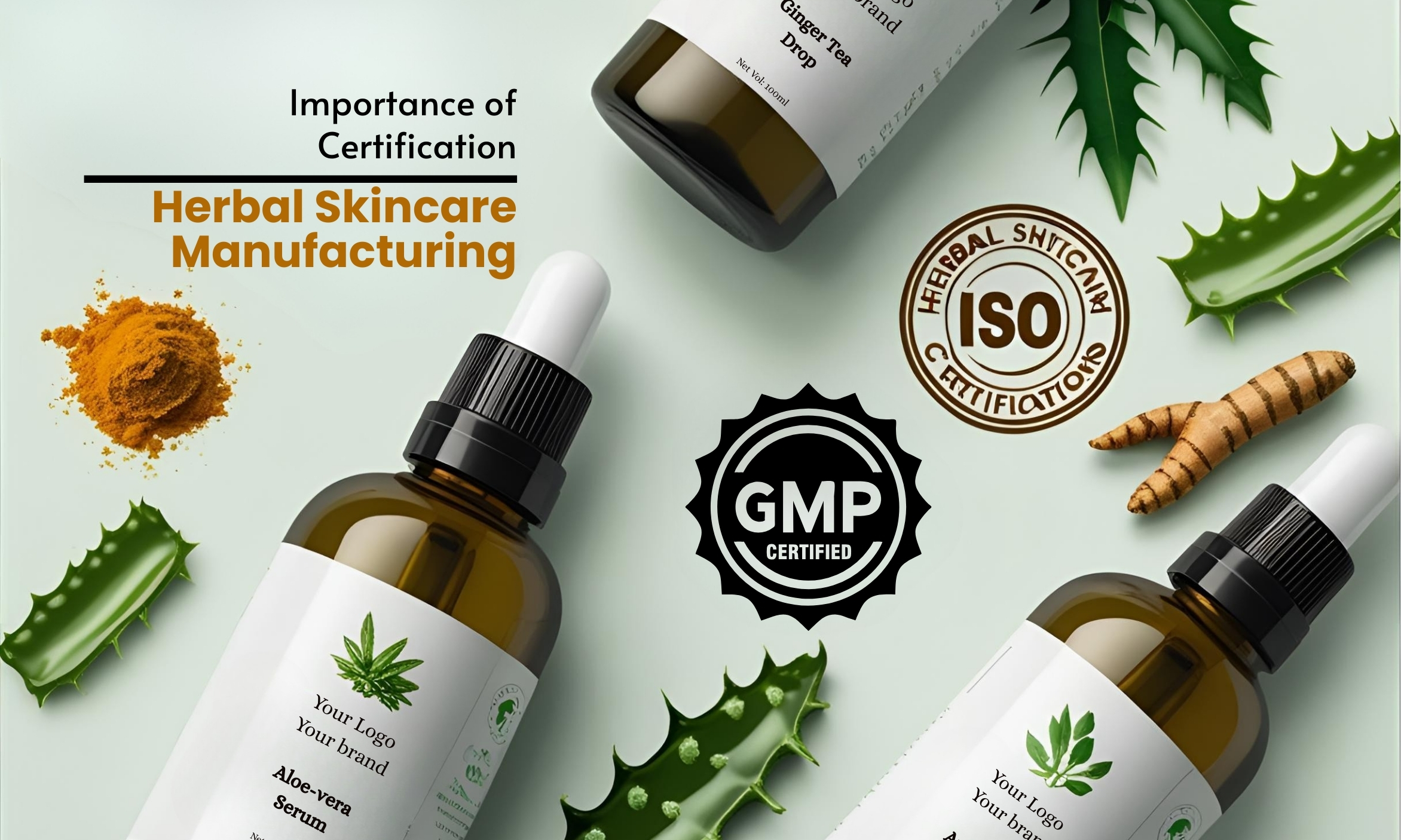
Certifications are not badges, they are commitments. A brand that manufactures without GMP & ISO compliance may be risking customer safety, while a brand that prioritizes certifications is building long-term credibility and customer loyalty.
Brands searching for certified skincare manufacturing India or cosmetic manufacturing compliance standards often prioritize GMP & ISO as non-negotiable requirements.
Key Points:
- Skincare quality depends on the manufacturing environment, not only the ingredients.
- Certifications ensure product safety, stability, and purity.
- Trust is earned through transparency and quality standards.
What Do GMP & ISO Certifications Mean?
GMP (Good Manufacturing Practices) refers to a set of guidelines mandated to ensure that every product is manufactured safely, consistently, and hygienically. It governs:
- Facility cleanliness
- Raw material handling
- Worker hygiene
- Production controls
- Batch records
GMP ensures that the product is not contaminated, mis-formulated, under-dosed, or improperly stored.
This is why GMP certification in skincare manufacturing is critical for ensuring product safety and batch consistency.
On the other hand, ISO (International Organization for Standardization) focuses on the system behind the manufacturing. ISO certification demonstrates that the company maintains:
- Standardized workflow processes
- Quality assurance protocols
- Continuous monitoring and improvement systems
- Documented quality reporting
Together, GMP & ISO create a manufacturing framework where quality is not checked at the end, but built into every step of the process.
This structured system is the backbone of ISO certified cosmetic production and quality assurance in skincare manufacturing.
Key Points:
- GMP ensures how skincare is physically produced.
- ISO ensures how processes and documentation are managed.
- Both ensure safe, predictable, and high-quality end products.
Why Certifications Are Non-Negotiable in Skincare Manufacturing
Skincare products directly interact with human skin, one of the most sensitive biological systems. Any contamination, wrong ingredient ratio, or microbial growth can cause allergies, irritation, or long-term damage.
This is why brands prefer safe skincare manufacturing practices and dermatologically tested cosmetic production environments.
Certifications ensure:
- No microbial contamination
- Correct measurement of ingredients
- Sterile filling and packaging conditions
- Safe and stable final products
Brands that choose uncertified manufacturers may face:
- Customer complaints
- Product recalls
- Damage to brand image
- Legal challenges
Choosing a Private Label Skincare Manufacturer that is certified means safeguarding your business reputation and customer health.
Partnering with a private label skincare manufacturer India with certifications ensures compliance with both domestic and international markets.
Key Points:
- Certifications protect the consumer and the brand.
- Ensures every batch matches expected results.
- Prevents harmful or unstable products from reaching the market.
Inside a GMP Certified Skincare Facility – What Really Happens
A GMP-compliant environment is engineered for cleanliness and safety. Every production area is sanitized, air-controlled, and monitored. Mixing vessels are stainless steel, sterilized before each batch, and handled only by trained technicians.
Such facilities are part of GMP certified cosmetic manufacturing units designed for contamination-free production.
Workers follow strict hygiene protocols, such as:
- Wearing gloves, masks, coats, hairnets, and sanitized uniforms
- Restricted access zones for contamination prevention
- Hand and equipment sterilization at specified intervals
Packaging and filling take place in controlled environments where dust, moisture, and microbes are minimized. No step is casual, every move is documented and traceable.
These practices ensure hygienic skincare production and quality-controlled cosmetic manufacturing.
Key Points:
- Controlled air, temperature, and sterility maintain product purity.
- Staff training and hygiene prevent contamination.
- Documentation ensures full traceability of every batch.
Key Pillars of ISO Quality Management in Skincare Production
ISO certification focuses on consistency and accountability. Every production task follows Standard Operating Procedures (SOPs), ensuring no batch varies from another.
This is essential for brands seeking consistent skincare product quality and standardized cosmetic manufacturing processes.
Key ISO principles include:
- Written documentation of each step
- Traceability from raw material to finished product
- Quality checkpoints throughout production
- Continuous improvement strategies
This means your product will always perform the same way — whether it is the first batch or the 100th batch.
This reliability strengthens brand trust in skincare products and long-term customer loyalty.
Key Points:
- Ensures stability and predictability of product performance.
- Strengthens brand reliability and reduces risk of quality failure.
- Helps maintain customer trust long-term.
Ingredient Sourcing & Authenticity Control
As a Natural & Organic Skincare Manufacturer, we verify the purity, grade, and origin of every ingredient. Only approved, lab-tested raw materials are allowed into the facility.
This approach aligns with organic skincare manufacturing standards and clean beauty ingredient sourcing.
We source:
- Steam-distilled hydrosols
- Cold-pressed carrier oils
- Bioactive plant extracts
- Dermatologically safe clinical actives
Each material arrives with:
- COA (Certificate of Analysis)
- MSDS safety documentation
- Origin and quality traceability record
This prevents adulteration, dilution, or unsafe ingredient substitution.
Traceability is a key factor in high-quality skincare manufacturing India and global compliance.
Key Points:
- Raw material quality directly affects product performance.
- Ingredient traceability protects consumer safety.
- Ethical sourcing supports brand credibility.
Brand Credibility & Market Advantage
When your product is manufactured in a certified facility, retailers, dermatologists, and marketplaces take your brand seriously.
Certification boosts visibility for brands targeting premium skincare market positioning and export-ready cosmetic products.
Certification supports:
- Higher pricing justification
- Entry into premium retail stores
- Compliance for export shipments
- Increased customer trust
It also helps the brand stand out in a market where many products are manufactured cheaply without safety controls.
This creates a strong advantage in competitive skincare branding and trusted cosmetic manufacturing.
Key Points:
- Certifications elevate brand value and positioning.
- Enhances customer perception and loyalty.
- Helps differentiate from low-quality competitors.
Cost Implications & Investment Value
Yes, certified manufacturing may cost slightly more — but this is an investment in brand trust. Poor-quality products lead to refunds, complaints, and brand damage, which are far more expensive.
This directly supports scalable skincare business growth and high-performance cosmetic products.
In contrast, certified production offers:
- Consistency
- Positive customer results
- Faster word-of-mouth growth
- Repeat purchasing cycles
Key Points:
- Certification protects long-term profits.
- Better customer satisfaction results in repeat sales.
- Higher product performance builds strong brand reputation.

Private Label Product Range Supported by Certified Manufacturing
Certified manufacturing environments enable brands to develop a wide range of safe and high-performance skincare products. At Aadhunik Ayurveda, we support private label brands with diverse product categories, including:
- Private Label Face Serums (Vitamin C, Niacinamide, Anti-Aging)
- Private Label Moisturizers & Creams (Hydration, Barrier Repair)
- Private Label Face Cleansers & Face Washes
- Private Label Facial Oils & Ayurvedic Treatment Oils
- Private Label Sunscreens & Day Creams
- Private Label Hair Care Products (Shampoo, Conditioner, Hair Oils)
- Private Label Body Care (Lotions, Scrubs, Body Butters)
Conclusion:
Launching a skincare line with the right private label manufacturer opens the door to endless possibilities for makeup artists. It allows you to offer products that truly reflect your artistry, values, and client needs—while relying on expert formulation, certified production, and smooth market compliance. Instead of juggling production complexities, you get to focus on creativity, branding, and building deeper customer trust. With personalized formulations, ethical sourcing, and flexible batch options, transforming your passion into a successful beauty brand becomes achievable and sustainable. All it takes is the right manufacturing partner who understands your vision and helps you bring it to life.
Choosing a GMP & ISO certified skincare manufacturer ensures your brand is built on safety, trust, and long-term success.
FAQs:
How does a private label manufacturer ensure ingredient quality and sustainability?
We source cold-pressed, organic-certified, and eco-friendly ingredients while ensuring regulatory compliance, batch testing, and scalability. This guarantees safe, effective, and market-ready bath & body products.
Why is GMP certification important in skincare manufacturing?
GMP certification in skincare manufacturing ensures that products are produced in a hygienic, controlled environment, reducing risks of contamination and ensuring consistent product quality.
What does ISO certification guarantee in cosmetic manufacturing?
ISO certified cosmetic manufacturing guarantees standardized processes, quality control systems, and continuous improvement, ensuring reliable and high-performance skincare products.