Launch a UK Skincare Brand from £4,000: A Manufacturer's Complete Guide to Building a Successful Beauty Business
Why a Smart Manufacturing Strategy Makes All the Difference | Why More Entrepreneurs Are looking forward to Launching Skincare Brands Than Ever Before in UK |Is £4,000 Really Enough to Launch a Professional Skincare Brand? |Where Should Your £4,000 Budget Be Invested? | Choosing the Right Manufacturing Partner Matters More Than Choosing the Cheapest One | Understanding Low MOQ Skincare Manufacturing Before You Launch| Start with Products That Customers Actually Need|Starting a skincare brand has become one of the most exciting business opportunities for entrepreneurs in the United Kingdom. Consumers are becoming increasingly conscious about the products they apply to their skin, creating strong demand for high-quality, ingredient-focused skincare. This shift has opened the door for new businesses that want to introduce innovative products without investing millions in manufacturing facilities.
Many aspiring founders assume they need a huge investment before entering the beauty industry. In reality, working with an experienced manufacturer allows brands to launch professionally with a much smaller budget than expected. Today, many successful skincare businesses begin with carefully selected product ranges, small production batches, and scalable manufacturing partnerships.
Why a Smart Manufacturing Strategy Makes All the Difference
From a manufacturer's perspective, we've seen startups evolve into established brands simply because they focused on choosing the right manufacturing partner instead of spending heavily on unnecessary infrastructure. Rather than building laboratories, hiring chemists, purchasing machinery, and sourcing raw materials independently, entrepreneurs can invest in product development, branding, and marketing while their manufacturing partner handles production.
If your budget is approximately £4,000, launching a professional skincare brand is entirely achievable when every pound is allocated strategically. The key is understanding where to invest, where to save, and how to work with a manufacturer that supports growing businesses instead of only large corporations.
Whether you're planning to sell through your own website, marketplaces, independent retailers, beauty salons, or international distributors, choosing the right manufacturing strategy from day one can significantly influence your long-term success.
Why More Entrepreneurs Are looking forward to Launching Skincare Brands Than Ever Before in UK
The skincare industry has changed dramatically over the past decade. Consumers are no longer purchasing products solely because they belong to famous multinational brands. Instead, they actively seek brands with transparent ingredient lists, authentic brand stories, sustainable practices, and products that address specific skincare concerns.
This shift has created enormous opportunities for independent brands entering the market.
Today's consumers often prefer products that emphasize botanical ingredients, gentle formulations, scientifically supported activities, and ethical manufacturing practices. Social media, online reviews, and influencer marketing have further reduced the barriers to entering the beauty industry, allowing new brands to compete alongside established names.
Another major advantage is that modern manufacturing has become more accessible. Instead of ordering hundreds of thousands of units, many manufacturers now support startups through flexible production models, making it easier for entrepreneurs to validate their ideas before expanding.
As manufacturers, we frequently work with businesses that begin with only three or four carefully selected products. Once customer demand grows, additional products are introduced while maintaining consistent quality across the entire range.
This approach reduces financial risk while allowing founders to understand customer preferences before making larger investments.
Is £4,000 Really Enough to Launch a Professional Skincare Brand?
One of the most common questions manufacturers receive is whether a limited budget can produce products that compete with established brands.
The answer depends less on the amount invested and more on how that investment is managed.
A startup budget should never be spent entirely on manufacturing inventory. Successful brands balance their investment across product development, packaging, branding, regulatory documentation, marketing preparation, and working capital.
Instead of launching ten different products, manufacturers often recommend introducing a focused collection that solves related skincare concerns. This allows businesses to maintain better inventory control while building a stronger brand identity.
For example, rather than launching an extensive catalogue immediately, many startups begin with:
- Facial Cleanser
- Face Serum
- Moisturizer
- Sunscreen
- Face Mask
This creates a complete skincare routine while keeping production costs manageable.
As customer feedback grows, additional categories such as toners, exfoliators, eye creams, body care, or hair care can be introduced gradually.
Where Should Your £4,000 Budget Be Invested?
One of the biggest mistakes new founders make is assuming that every penny should be used for manufacturing products. In reality, a successful skincare brand requires investment across several essential areas.
| Business Activity | Why It Matters |
|---|---|
| Product Manufacturing | Produces high-quality skincare products ready for sale. |
| Packaging Development | Creates professional shelf appeal and protects product quality. |
| Label Design & Branding | Helps customers recognize and trust your brand. |
| Product Testing & Documentation | Supports product quality, consistency, and regulatory readiness. |
| Website & Marketing | Builds online visibility and customer acquisition. |
| Reserve Working Capital | Covers unexpected expenses and future business growth. |
From our manufacturing experience, businesses that distribute their budget wisely often achieve better long-term growth than those that invest everything into large production quantities.
Launching lean allows brands to respond quickly to customer demand while minimizing unsold inventory.
Choosing the Right Manufacturing Partner Matters More Than Choosing the Cheapest One
Many first-time entrepreneurs compare manufacturers only by price. While keeping costs under control is important, selecting the cheapest supplier can create significant challenges later.
Manufacturing quality directly influences customer satisfaction, repeat purchases, online reviews, and your brand's reputation.
An experienced private label skincare manufacturer UK supplier should provide far more than production services. They should guide businesses through formulation options, ingredient selection, packaging compatibility, production planning, documentation, and quality control.
A reliable manufacturing partner helps reduce risks before products even reach the market.
When evaluating manufacturers, consider questions such as:
- Do they operate under ISO-certified quality systems?
- Are their facilities GMP compliant?
- Are their skincare and wellness products manufactured under licensed authority-approved facilities?
- Can they support low minimum order quantities?
- Do they offer formulation customization?
- Can production scale as your business grows?
- Do they maintain consistent quality between production batches?
These factors often have a greater impact on your business than simply saving a small percentage on manufacturing costs.
Understanding Low MOQ Skincare Manufacturing Before You Launch
For startups, inventory management is just as important as product quality.
High minimum order quantities can tie up valuable capital, making it difficult for businesses to invest in branding, marketing, or future product launches.
This is why many entrepreneurs now prefer manufacturers offering low MOQ skincare manufacturing, allowing brands to begin with smaller production runs while testing market demand.
Lower MOQs provide several advantages:
- Reduced financial risk.
- Easier inventory management.
- Faster product launches.
- Opportunity to introduce seasonal collections.
- Flexibility to improve formulations based on customer feedback.
- Better cash flow during the early stages of business.
From a manufacturer's perspective, low MOQs should never mean compromising on quality. Professional manufacturers apply the same quality standards to small production batches as they do to larger commercial orders.

Start with Products That Customers Actually Need
One of the biggest misconceptions in the beauty industry is that launching more products leads to more sales.
In reality, successful skincare brands often begin with fewer products that address clear customer concerns.
Instead of offering dozens of formulations, focus on products that work together as a complete skincare routine.
Popular starter categories include:
- Daily Face Cleanser
- Hydrating Face Serum
- Lightweight Moisturizer
- Sunscreen
- Clay Face Mask
These categories appeal to a broad customer base while allowing your brand to establish credibility before expanding into specialized treatments.
Once your audience grows, additional products can be introduced based on customer feedback and market demand rather than assumptions.
Formulation Is Where Your Brand Truly Begins
One of the biggest misconceptions in the beauty industry is that launching more products leads to more sales.
In reality, successful skincare brands often begin with fewer products that address clear customer concerns.
Instead of offering dozens of formulations, focus on products that work together as a complete skincare routine.
Popular starter categories include:
- Daily Face Cleanser
- Hydrating Face Serum
- Lightweight Moisturizer
- Sunscreen
- Clay Face Mask
These categories appeal to a broad customer base while allowing your brand to establish credibility before expanding into specialized treatments.
Once your audience grows, additional products can be introduced based on customer feedback and market demand rather than assumptions.
Formulation Is Where Your Brand Truly Begins
Packaging may attract attention, but formulation determines whether customers return.
Every successful skincare brand is built upon products that consistently deliver results while providing an enjoyable user experience.
Manufacturers spend considerable time selecting compatible ingredients, determining appropriate texture, evaluating fragrance options, optimizing stability, and ensuring production consistency.
Developing a formulation involves much more than simply combining ingredients.
A professional development process considers:
- Ingredient compatibility
- Product stability
- Texture and sensory experience
- Skin feel after application
- Packaging compatibility
- Shelf-life performance
- Manufacturing consistency
- Consumer expectations
Rather than chasing every trending ingredient, focus on formulations that solve real skincare concerns while aligning with your brand's identity.
Customers increasingly value products that feel effective, consistent, and trustworthy over products filled with unnecessary marketing claims.
Packaging Is More Than Just Attractive Design
Many first-time skincare entrepreneurs believe packaging is simply about creating an attractive product. While visual appeal certainly influences purchasing decisions, packaging serves a much greater purpose in protecting product quality, maintaining stability, and creating a memorable customer experience.
From a manufacturer's perspective, packaging should always be selected alongside formulation development rather than after the product has been finalized. Different formulations may require different packaging materials to preserve their performance over time. For example, certain active ingredients are better protected in airless pumps, while facial oils often perform best in UV-protected glass bottles to reduce light exposure.
Your packaging should also reflect your brand identity. Minimalist designs often communicate premium quality, while vibrant packaging may appeal to younger audiences. Regardless of the style you choose, consistency across your product range helps customers recognize your brand more easily.
Beyond aesthetics, practical details such as ease of use, durability during shipping, and accurate labeling contribute significantly to the overall customer experience. Investing in well-designed packaging from the beginning can improve customer satisfaction and encourage repeat purchases.
Build a Brand Before You Build a Product Catalogue
One of the most common mistakes we observe as manufacturers is that new businesses focus heavily on producing multiple products while giving very little attention to developing a recognizable brand.
Customers rarely purchase skincare products based solely on ingredients. They also buy into the values, story, and identity behind the brand.
Before launching your first product, clearly define:
- What makes your brand different?
- Who is your ideal customer?
- What skin concerns are you solving?
- What tone of communication will your brand use?
- What values will your business represent?
Your logo, typography, packaging colours, website design, and product descriptions should all communicate the same message. A strong brand identity creates trust and helps customers remember your products in a highly competitive market.
As manufacturers, we often advise startups to invest in creating a cohesive brand image rather than launching a large number of products. A focused brand with a clear identity usually performs better than a broad product range with inconsistent messaging.
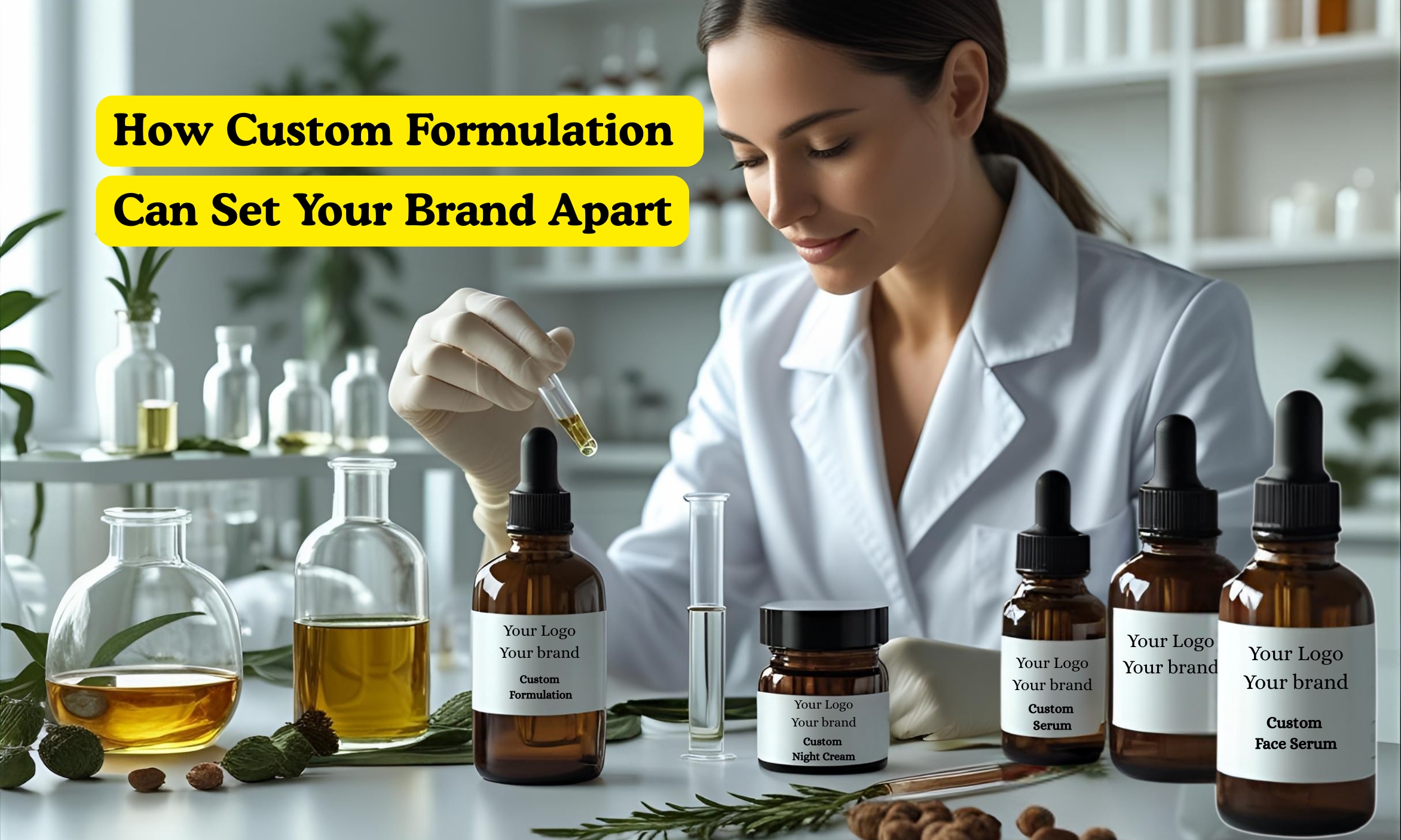
Why Custom Formulations Can Help Your Brand Stand Out
Many startups begin with ready-made formulations because they allow products to reach the market quickly. However, as the business grows, developing customized formulations becomes an effective way to differentiate the brand from competitors.
Working with an experienced manufacturer gives you access to formulation specialists who can modify textures, fragrances, botanical extracts, active ingredients, and product performance according to your brand vision.
For example, your moisturizer may feature a lighter texture for oily skin, while your facial serum could include botanical extracts chosen specifically for hydration or skin barrier support.
Choosing custom skincare formulation services allows businesses to create products that reflect their unique positioning instead of competing solely on packaging or price.
Although customized formulations may require additional development time, they often become one of the strongest long-term assets of a skincare brand.
Understanding the Manufacturing Process Before Production Begins
Many entrepreneurs place their first manufacturing order without fully understanding what happens inside a professional manufacturing facility.
A structured production process helps ensure consistency, quality, and efficiency throughout every batch.
A typical manufacturing workflow includes:
- Product consultation and requirement analysis.
- Formula selection or custom formulation development.
- Ingredient sourcing and verification.
- Packaging compatibility assessment.
- Sample development and client approval.
- Batch manufacturing under controlled conditions.
- Quality inspection during production.
- Filling, sealing, and labeling.
- Final quality checks.
- Packaging and dispatch.
Each stage contributes to producing skincare products that meet consistent quality standards while minimizing manufacturing errors.
Professional manufacturers follow documented Standard Operating Procedures (SOPs) throughout production, allowing every batch to maintain uniformity regardless of production volume.
Why Quality Control Should Never Be Overlooked
Consumers expect skincare products to deliver consistent performance every time they make a purchase. Maintaining that consistency depends heavily on robust quality control systems.
From a manufacturer's perspective, quality control begins long before production starts. Raw materials are carefully assessed, manufacturing equipment is monitored, and production parameters are documented to ensure every batch meets predefined quality specifications.
Finished products are evaluated for multiple quality parameters, including:
- Appearance
- Colour consistency
- Fragrance profile
- pH level
- Viscosity
- Filling accuracy
- Packaging integrity
- Product stability
Manufacturers operating under ISO-certified quality management systems and GMP-compliant production facilities follow structured procedures to maintain consistent product quality across every production run.
Working with manufacturers that produce skincare and wellness products in licensed authority-approved facilities provides an additional level of confidence for businesses preparing to enter competitive markets.
Compliance Is an Essential Investment, Not an Additional Expense
Many startup founders initially view compliance as an unnecessary cost. However, proper documentation plays a critical role in building customer confidence and supporting business growth.
A responsible manufacturer assists brands by maintaining organized manufacturing records and providing documentation relevant to the products being produced.
Depending on your business requirements and target market, documentation may include manufacturing records, batch information, ingredient documentation, quality reports, and other supporting technical files.
Choosing a manufacturing partner that follows ISO standards and GMP guidelines demonstrates a commitment to producing skincare products through structured, quality-focused processes rather than informal manufacturing practices.
This level of professionalism becomes increasingly valuable as your business expands into retail partnerships, distributors, or international markets.
How Long Does It Take to Launch a Skincare Brand?
One of the biggest misconceptions among new entrepreneurs is that a skincare brand can be launched within a few weeks.
In reality, developing a successful brand requires careful planning and coordination between product development, packaging, branding, and manufacturing.
Although timelines vary depending on customization requirements, a typical launch process may include:
- Initial consultation and product planning.
- Formula selection or custom development.
- Sample evaluation and revisions.
- Packaging finalization.
- Label design approval.
- Manufacturing.
- Quality inspection.
- Filling and packaging.
- Delivery of finished products.
Businesses that prepare branding materials, packaging artwork, and marketing strategies while manufacturing is underway are often able to launch much more efficiently.
Good planning reduces delays and helps ensure products reach customers on schedule.
Practical Ways to Maximize a £4,000 Startup Budget
Launching with a limited budget doesn't mean compromising on quality. It simply means making informed decisions at every stage of the process.
As manufacturers, we often recommend the following strategies to help startups get the most value from their investment:
- Begin with three to five carefully selected products instead of launching an extensive catalogue.
- Choose packaging that balances premium appearance with cost efficiency.
- Prioritize product quality over excessive packaging embellishments.
- Work with manufacturers offering flexible production quantities.
- Invest in professional branding that can be used consistently across future product launches.
- Allocate part of your budget for digital marketing rather than spending everything on inventory.
- Focus on customer feedback after launch to guide future product development.
Businesses that scale gradually often experience stronger long-term growth because they can make decisions based on real customer demand rather than assumptions.
Common Mistakes That Increase Startup Costs
Over the years, we've worked with many new skincare brands, and certain challenges appear repeatedly. Fortunately, most of them can be avoided with proper planning and the right manufacturing partner.
Some of the most common mistakes include:
- Launching too many products in the first production run.
- Selecting packaging without considering product compatibility.
- Prioritizing low prices over manufacturing quality.
- Ignoring branding until the products are ready.
- Ordering excessive inventory before validating market demand.
- Working with manufacturers that offer limited technical support.
- Underestimating marketing expenses after production.
Avoiding these mistakes helps preserve valuable capital while creating a stronger foundation for future growth.
Scaling Your Skincare Brand After a Successful Launch
Launching your first collection is an important milestone, but building a sustainable skincare business requires a long-term growth strategy. Many successful brands did not begin with extensive product portfolios or nationwide retail distribution. Instead, they focused on delivering consistent quality, understanding customer preferences, and expanding step by step.
From a manufacturer's perspective, brands that scale gradually often experience more stable growth than those that expand too quickly. Once your initial products gain positive customer feedback and repeat purchases, you can confidently introduce new formulations based on real market demand.
Rather than launching products randomly, consider expanding into categories that naturally complement your existing range. For example, if your cleanser and moisturizer perform well, your next additions could include a toner, facial mist, eye cream, night cream, or exfoliating treatment.
Steady expansion allows businesses to strengthen their identity while maintaining consistent product quality and inventory management.
Growing Beyond Your First Sales Channel
One advantage of starting with a professional manufacturing partner is that your products can be positioned for multiple sales channels as your business grows.
Many UK skincare startups begin by selling directly to consumers through their own website. As brand awareness increases, businesses often expand into additional channels to reach a wider audience.
Popular growth channels include:
- Brand-owned eCommerce websites
- Online marketplaces
- Independent beauty retailers
- Beauty salons and spas
- Pharmacies and wellness stores
- Subscription beauty boxes
- International distributors
- Corporate gifting and promotional partnerships
Each channel has different customer expectations, but maintaining consistent product quality across all platforms helps strengthen your brand reputation.
Why Experienced Manufacturers Become Long-Term Business Partners
Many entrepreneurs initially view manufacturers simply as suppliers. However, the most successful skincare brands often treat their manufacturers as strategic business partners.
An experienced manufacturer contributes far more than production capacity.
They provide valuable guidance on:
- Product category selection
- Ingredient recommendations
- Formula improvements
- Packaging compatibility
- Production planning
- Batch consistency
- Inventory management
- Scalability planning
As your business grows, your manufacturing partner should be capable of increasing production volumes without compromising quality standards.
Working with a manufacturer that understands startup challenges allows your business to grow with confidence while avoiding unnecessary production disruptions.
Building Customer Trust Through Consistent Product Quality
In today's skincare industry, customer loyalty depends heavily on consistency.
Consumers expect every bottle, jar, and tube they purchase to provide the same experience they enjoyed the first time.
Maintaining that consistency requires structured manufacturing systems, documented production procedures, trained personnel, and rigorous quality checks throughout every production stage.
When customers receive the same texture, fragrance, appearance, and performance with every purchase, they develop confidence in your brand. That confidence often leads to repeat purchases, positive reviews, and valuable word-of-mouth recommendations.
From our experience as manufacturers, brands that prioritize consistent quality often outperform competitors that focus only on marketing campaigns.
Why Certification Reflects a Commitment to Quality
Although certifications alone do not ensure exceptional products, they demonstrate that a manufacturer has invested in structured systems designed to improve consistency, traceability, and operational excellence.
Choosing a manufacturer operating under ISO-certified manufacturing and GMP-certified skincare manufacturing provides businesses with confidence that products are produced through standardized quality management processes.
Similarly, producing skincare and wellness products in licensed authority-approved manufacturing facilities demonstrates a commitment to responsible production practices and regulatory compliance.
Rather than viewing certifications as marketing tools, they should be considered part of a manufacturer's overall dedication to delivering reliable products that meet professional quality standards.
What to Look for in a Manufacturing Partner
Selecting the right manufacturing partner is one of the most important decisions you will make while building your skincare brand.
Instead of comparing manufacturers based only on pricing, evaluate them based on the value they bring to your business.
| Consideration | Why It Matters for Your Brand |
|---|---|
| Manufacturing Experience | Supports smoother product development and production planning. |
| ISO-Certified Manufacturing | Demonstrates structured quality management systems. |
| GMP-Certified Skincare Manufacturing | Ensures products are manufactured following recognized good manufacturing practices. |
| Low MOQ Options | Helps startups launch with lower financial risk. |
| Custom Formulation Support | Allows brands to develop unique products over time. |
| Packaging Guidance | Improves both product protection and customer experience. |
| Scalable Production Capacity | Supports business growth without changing manufacturers. |
| Quality Control Systems | Helps maintain consistent product quality across every batch. |
Choosing a manufacturer based on long-term capabilities rather than short-term cost savings often creates a stronger foundation for sustainable business growth.
Why More UK Entrepreneurs Are Choosing Private Label Manufacturing
The beauty industry continues to evolve rapidly, and entrepreneurs increasingly prefer manufacturing models that reduce operational complexity while maintaining product quality.
Instead of investing heavily in production facilities, laboratory equipment, raw material sourcing, and manufacturing staff, businesses can focus on areas that directly influence growth, including branding, customer engagement, and marketing.
Working with an experienced private label skincare manufacturer allows founders to bring professionally manufactured products to market without managing the complexities of in-house production.
This approach not only reduces startup costs but also provides greater flexibility to introduce new products as consumer demand changes.
For businesses launching with a budget of approximately £4,000, private label manufacturing offers a practical pathway into one of the world's fastest-growing consumer industries.
Final Thoughts
Launching a successful skincare brand is not determined by the size of your initial investment, it is determined by the quality of your planning, the strength of your brand, and the reliability of your manufacturing partner.
At Aadhunik Ayurveda, we have seen many businesses begin with modest budgets and carefully selected product ranges before growing into recognised brands serving thousands of customers. Their success was not built on producing the largest catalogue from day one, but on delivering consistent quality, understanding customer needs, and scaling strategically.
If you are planning to launch a UK skincare brand from £4,000, focus on building strong foundations. Invest in high-quality formulations, professional branding, suitable packaging, and a manufacturing partner that supports your long-term vision.
A manufacturer should do more than produce products, they should contribute technical expertise, maintain rigorous quality standards, and provide the flexibility needed to grow alongside your business.
CTA
Ready to Launch Your UK Skincare Brand?
If you're looking for an experienced manufacturing partner to help turn your skincare business idea into reality, partnering with the right team can make all the difference. From product selection and custom skincare formulation services to packaging guidance, quality-focused manufacturing, and scalable production, an experienced manufacturer can support your journey at every stage.
Whether you're launching your first product or building a complete skincare range, choosing a manufacturer with ISO-certified manufacturing, GMP-certified skincare manufacturing, flexible MOQs, and licensed authority-approved production facilities can help you bring high-quality skincare products to market with confidence.
Start building your skincare brand today with a manufacturing partner that grows with your business, not just your first order.
FAQs:
1. Can I really launch a UK skincare brand with a budget of £4,000?
Yes. By working with an experienced private label skincare manufacturer that offers flexible MOQs, startups can allocate their budget across manufacturing, branding, packaging, and marketing instead of investing in production facilities.
2. What products should I launch first?
A focused collection of three to five products, such as a cleanser, serum, moisturizer, sunscreen, and face mask, is often sufficient for establishing a professional skincare brand.
3. What is the advantage of low MOQ skincare manufacturing?
Lower minimum order quantities reduce financial risk, improve inventory management, and allow startups to test customer demand before increasing production.
4. Should I choose private label or custom formulation?
Private label products enable faster market entry, while custom skincare formulation services help create unique products that differentiate your brand over the long term.
5. Why is choosing the right manufacturer so important?
A reliable manufacturer supports formulation development, quality control, packaging compatibility, production planning, and future scalability while maintaining consistent product quality.
6. Why are ISO and GMP certifications important?
Manufacturers operating under ISO-certified manufacturing and GMP-certified skincare manufacturing follow structured quality management systems and standardized production practices that help ensure consistency across every batch.
7. How long does it usually take to launch a skincare brand?
The timeline varies depending on formulation customization, packaging development, approvals, and production scheduling. Proper planning helps reduce unnecessary delays.
8. Can I expand my product range after launch?
Absolutely. Many successful brands begin with a small collection and gradually introduce new products based on customer feedback and market demand.
9. Can I sell my skincare products through multiple channels?
Yes. Professionally manufactured products can be sold through eCommerce websites, online marketplaces, retailers, beauty salons, wellness stores, and international distribution networks.
10. How can I make my skincare brand stand out?
Focus on consistent product quality, a clear brand identity, attractive packaging, effective formulations, excellent customer service, and long-term relationships with a trusted manufacturing partner.
11. What should I look for before selecting a skincare manufacturer?
Evaluate manufacturing experience, production capabilities, quality control systems, certification standards, customization options, packaging support, scalability, and communication rather than comparing prices alone.
12. Is packaging really that important?
Yes. Packaging protects product quality, improves customer experience, strengthens brand recognition, and influences purchasing decisions both online and in retail environments.
13. What are the biggest mistakes new skincare startups make?
Launching too many products, ordering excessive inventory, overlooking branding, choosing manufacturers based only on price, and underestimating marketing budgets are among the most common challenges.
14. Can my manufacturer help as my business grows?
Experienced manufacturers often support product expansion, larger production volumes, formulation improvements, packaging upgrades, and operational planning as your brand scales.
15. Why do many startups prefer private label skincare manufacturing?
Private label manufacturing allows entrepreneurs to launch professionally without investing in their own production facilities, making it easier to enter the market with lower upfront investment while maintaining high manufacturing standards.