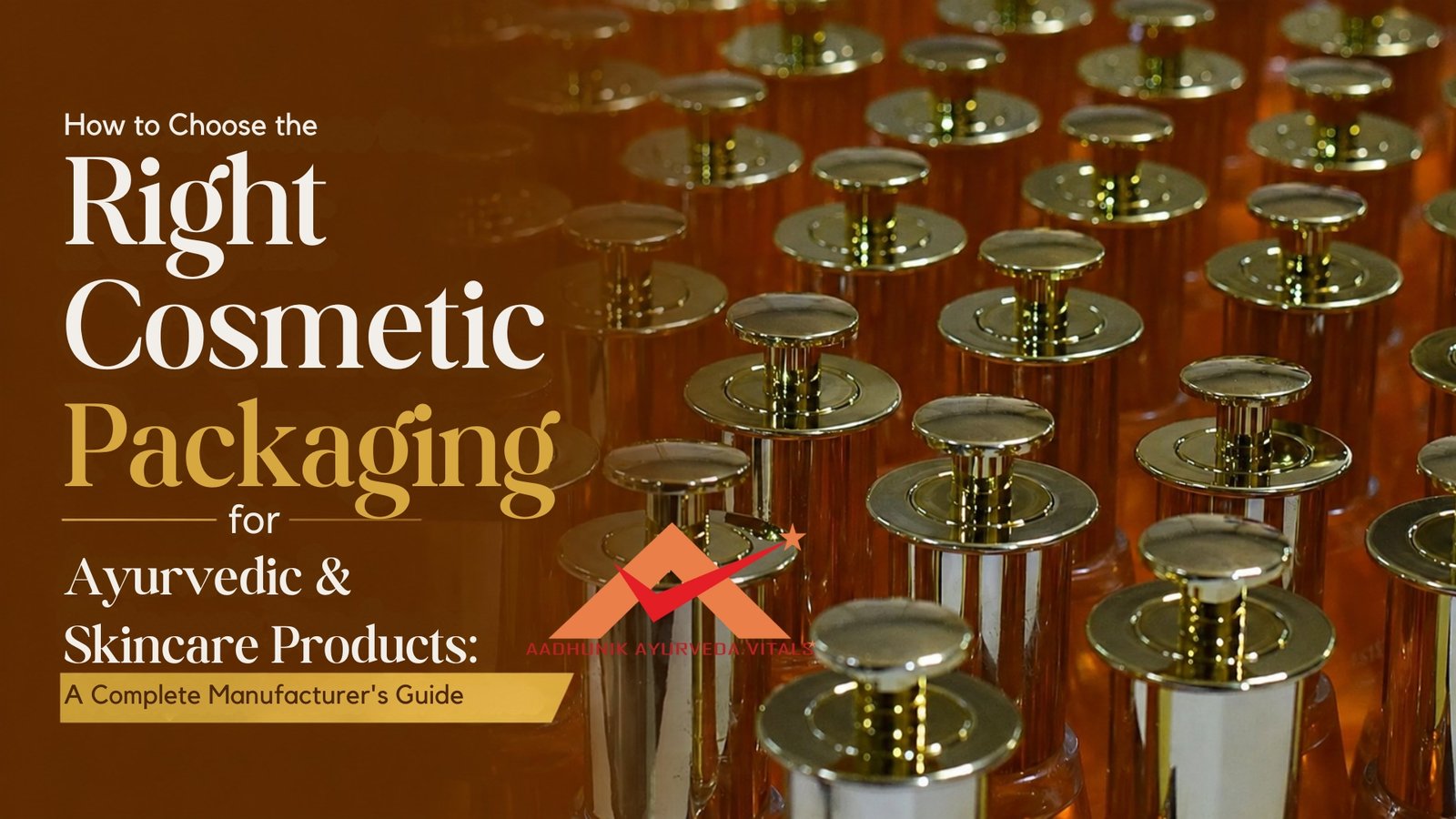
How to Choose the Right Cosmetic Packaging for Ayurvedic & Skincare Products: A Complete Manufacturer's Guide
Why Packaging Matters More Than Most Brands Realize | Understanding Cosmetic Packaging from a Manufacturer's Perspective |The Relationship Between Formulation and Packaging |Glass Packaging: The Gold Standard for Premium Skincare | Amber Glass Bottles: Protecting Sensitive Ingredients | Frosted Glass Packaging: Luxury Meets Performance| Choosing the Right Bottle for Different Products|Introduction
In today's skincare and wellness care industry, product quality alone is no longer enough to build a successful brand. Before a customer experiences the formulation, they interact with the packaging. The bottle they hold, the cap they open, the pump they press, and even the texture of the container all shape their first impression. In fact, packaging has become one of the strongest factors influencing purchasing decisions, product preservation, customer experience, and long-term brand loyalty.
From a manufacturer's perspective, packaging is much more than an attractive outer shell. It serves as the first protective barrier that safeguards the formulation from light, moisture, oxygen, contamination, and physical damage. Choosing the wrong packaging can shorten shelf life, reduce ingredient stability, increase leakage during transportation, and negatively affect customer satisfaction, even if the formulation itself is exceptional.
At Aadhunik Ayurveda, we believe packaging should never be treated as an afterthought. Every formulation deserves packaging that complements its stability, functionality, and positioning in the market. Whether it is a luxury facial serum, herbal shampoo, Ayurvedic hair oil, body lotion, essential oil, hydrosol, or herbal face cream, selecting the right packaging is just as important as selecting the right ingredients.
This guide explains how manufacturers evaluate packaging materials, bottle designs, dispensing systems, compatibility, sustainability, export requirements, and branding opportunities. If you are planning to launch your own skincare or Ayurvedic brand, understanding skincare packaging solutions will help you make informed decisions that benefit both your product and your customers.
Why Packaging Matters More Than Most Brands Realize
Many startups spend months perfecting their formulation but only a few days selecting packaging. From a manufacturer's point of view, this is one of the biggest mistakes a brand can make.
Packaging directly influences product stability, customer experience, transportation safety, and even product performance. A poorly selected container may expose sensitive botanical ingredients to sunlight, allow air inside after every use, or react with certain essential oils, reducing product quality over time.
At Aadhunik Ayurveda, packaging selection begins alongside formulation development, not after production. Every formulation is tested for compatibility with its intended packaging to ensure maximum safety and performance.
A well-designed packaging system provides several benefits:
- Protects formulations from contamination.
- Improves product shelf life.
- Enhances premium brand perception.
- Reduces leakage and transit damage.
- Creates a better consumer experience.
Packaging is therefore not simply a marketing tool, it is an essential part of product development.
Understanding Cosmetic Packaging from a Manufacturer's Perspective
A professional cosmetic packaging manufacturer India does not recommend packaging based only on appearance. Instead, packaging is selected according to the formulation's chemical properties, viscosity, sensitivity to light, dispensing requirements, transportation conditions, and target customer.
At Aadhunik Ayurveda, our packaging team evaluates several important factors before recommending bottles or containers.
These include:
- Formulation compatibility
- Product viscosity
- UV sensitivity
- Shelf-life requirements
- Consumer usability
- Branding goals
- Export regulations
Only after understanding these parameters is the most suitable packaging selected.
The Relationship Between Formulation and Packaging
Every skincare product behaves differently.
A lightweight facial serum requires completely different packaging than a thick body butter or herbal shampoo.
For example:
- Water-based serums require airtight containers to reduce oxidation.
- Essential oils require glass packaging to avoid plastic interaction.
- Herbal creams need wide-mouth jars or airless pumps.
- Hair oils perform better inside leak-proof glass or PET bottles.
- Hydrosols require spray bottles that deliver fine mist while maintaining hygiene.
At Aadhunik Ayurveda, packaging selection always begins with understanding the formulation rather than choosing whichever bottle appears most attractive.
Glass Packaging: The Gold Standard for Premium Skincare
Among all packaging materials, glass continues to be the preferred choice for premium skincare products.
Your packaging catalogue contains several beautiful glass bottle options including clear, amber, frosted, and dropper bottles that perfectly suit premium formulations.
Glass packaging offers excellent chemical resistance and maintains ingredient integrity over long periods.
Benefits include:
- Does not react with essential oils.
- Maintains ingredient stability.
- Creates luxury perception.
- Highly recyclable.
- Better suited for export-quality products.
This is why premium facial oils, serums, botanical concentrates, and essential oils are commonly packaged in glass.
At Aadhunik Ayurveda, many of our premium skincare formulations are paired with high-quality glass bottles because they provide both functionality and luxury appeal.
Amber Glass Bottles: Protecting Sensitive Ingredients
Not all formulations tolerate sunlight equally.
Ingredients like Vitamin C, botanical extracts, essential oils, herbal actives, and cold-pressed oils gradually degrade when exposed to ultraviolet light.
This is where amber bottles become valuable.
The amber bottles featured throughout your catalogue are ideal for formulations requiring additional UV protection.
Advantages include:
- Blocks harmful UV rays.
- Protects botanical activities.
- Extends formulation stability.
- Premium pharmaceutical appearance.
- Suitable for export markets.
Manufacturers frequently recommend amber packaging for:
- Herbal oils
- Essential oils
- Face serums
- Active botanical extracts
- Aromatherapy products
Rather than selecting amber bottles only for aesthetics, manufacturers choose them because they actively preserve product quality.
Frosted Glass Packaging: Luxury Meets Performance
Luxury skincare brands often prefer frosted glass packaging because it immediately communicates sophistication.
Besides appearance, frosted bottles also provide an additional layer of light diffusion, making them suitable for premium skincare collections.
Products commonly packed inside frosted bottles include:
- Facial serums
- Brightening oils
- Anti-aging concentrates
- Vitamin facial oils
- Luxury botanical blends
From a manufacturer's perspective, frosted packaging is often selected when a brand wishes to position itself in the premium skincare segment.
Choosing the Right Bottle for Different Products
One packaging style cannot accommodate every formulation.
Manufacturers carefully match product consistency with bottle design.
| Product | Recommended Packaging |
|---|---|
| Facial Serum | Glass Dropper Bottle |
| Essential Oil | Amber Glass Bottle |
| Herbal Hair Oil | Glass/PET Bottle |
| Hydrosol | Spray Bottle |
| Lotion | Pump Bottle |
| Shampoo | Flip-top Bottle |
| Face Cream | Jar or Airless Pump |
| Body Butter | Wide-mouth Jar |
Selecting packaging based on product function improves customer experience while reducing wastage.
Why Dropper Bottles Dominate the Serum Industry
One of the most common packaging formats shown in your catalogue is the dropper bottle.
Manufacturers prefer droppers because facial serums require controlled dispensing.
Unlike pumps, droppers allow users to measure product accurately.
Advantages include:
- Precise application
- Reduced wastage
- Better hygiene
- Luxury appearance
- Suitable for concentrated formulations
This explains why Vitamin C serums, Kumkumadi oils, facial concentrates, herbal boosters, and botanical oils almost always use glass dropper bottles.
At Aadhunik Ayurveda, we frequently recommend premium dropper packaging for high-value formulations where dosage accuracy directly improves consumer satisfaction.
Pump Bottles: Ideal for Everyday Skincare
Pump bottles have become increasingly popular because they combine convenience with hygiene.
Unlike jars, pumps minimize direct contact between fingers and the formulation.
This reduces contamination while improving product longevity.
Pump packaging is suitable for:
- Moisturizers
- Body lotions
- Face cleansers
- Liquid soaps
- Hair conditioners
Manufacturers also appreciate pump systems because they deliver consistent product quantity with every use, creating a better customer experience.
Jar Packaging: Best Choice for Creams, Balms & Body Butters
Not every skincare product is suitable for bottles or pumps. Thick formulations such as face creams, herbal masks, body butters, cleansing balms, scrubs, and Ayurvedic lepams require wider openings for easy access. This is where cosmetic jars become the preferred packaging solution. From a manufacturer's perspective, jar packaging is selected not only because it is convenient for consumers but also because it accommodates formulations with high viscosity that cannot flow easily through pumps or droppers.
At Aadhunik Ayurveda, we recommend premium cosmetic jars after evaluating the formulation's texture, filling process, and intended consumer experience. Luxury glass jars are often selected for premium skincare collections, while high-quality PET or acrylic jars may be preferred for lightweight products and travel-friendly ranges.
Manufacturers generally recommend jar packaging for:
- Face creams and moisturizers
- Herbal ubtans and masks
- Body butters
- Ayurvedic massage balms
- Exfoliating scrubs
- Overnight treatment creams
Choosing the correct jar size and closure system also helps maintain product hygiene and enhances overall brand presentation.
Airless Packaging: The Future of Premium Skincare
One of the biggest innovations in modern cosmetic packaging is the airless pump system. Unlike traditional pumps, airless containers prevent outside air from entering the bottle after every use. This significantly reduces oxidation, contamination, and degradation of sensitive ingredients.
From a manufacturer's perspective, airless packaging is particularly valuable for formulations containing antioxidants, botanical extracts, peptides, probiotics, and naturally derived actives that can lose effectiveness when repeatedly exposed to oxygen.
At Aadhunik Ayurveda, we often recommend airless packaging for brands launching high-performance skincare because it provides several long-term advantages.
Key benefits include:
- Better protection from oxidation
- Improved ingredient stability
- Reduced microbial contamination
- Less product wastage
- Longer product freshness
- Premium consumer experience
Although airless packaging may increase initial packaging costs, it often delivers better value through improved product stability and customer satisfaction.
Choosing the Right Closure System
Many brands focus only on selecting bottles while overlooking one equally important component, the closure. Caps, pumps, droppers, mist sprayers, and flip-top closures all influence usability, leakage prevention, and product preservation.
A manufacturer evaluates the dispensing mechanism according to the product's viscosity and application method.
For example:
- Essential oils perform best with droppers.
- Face mists require fine spray pumps.
- Herbal shampoos are commonly paired with flip-top caps or disc-top closures.
- Lotions work efficiently with dispensing pumps.
- Hair oils often use reducer plugs or treatment pumps.
A poorly matched closure can lead to excessive product dispensing, leakage during transport, or contamination after repeated use. This is why packaging should always be evaluated as a complete system rather than as individual components.
Packaging Compatibility Testing: An Essential Manufacturing Step
A common misconception among new brands is that any bottle can hold any cosmetic formulation. In reality, every formulation must undergo packaging compatibility testing before commercial production.
Certain ingredients, particularly essential oils, botanical extracts, alcohols, and active compounds, can react with packaging materials over time. These interactions may cause discoloration, fragrance loss, leakage, swelling, or structural damage to the container.
At Aadhunik Ayurveda, packaging compatibility testing forms an essential part of product development. Before approving a packaging design, we evaluate:
- Product stability inside the selected container
- Leakage resistance
- Compatibility between formulation and packaging material
- Performance under different storage temperatures
- Long-term shelf-life behavior
This testing ensures that consumers receive products in the same condition in which they were manufactured.
How Packaging Directly Affects Shelf Life
Shelf life is not determined solely by formulation. Packaging plays an equally significant role in preserving product quality throughout its lifecycle.
Exposure to oxygen, heat, humidity, and sunlight gradually reduces the effectiveness of many botanical ingredients. Proper packaging minimizes these external influences and helps maintain formulation stability.
For example:
- Amber glass reduces UV exposure.
- Airless pumps reduce oxidation.
- High-quality seals prevent moisture ingress.
- Leak-proof closures prevent contamination.
From a manufacturer's perspective, selecting premium packaging is one of the simplest ways to extend product stability without altering the formulation itself.
Want to understand how packaging materials directly influence product stability, oxidation, moisture protection, and shelf life? Read our detailed guide on How Packaging Affects the Shelf Life of Ayurvedic Products, where we explain the science behind packaging compatibility and long-term product preservation.
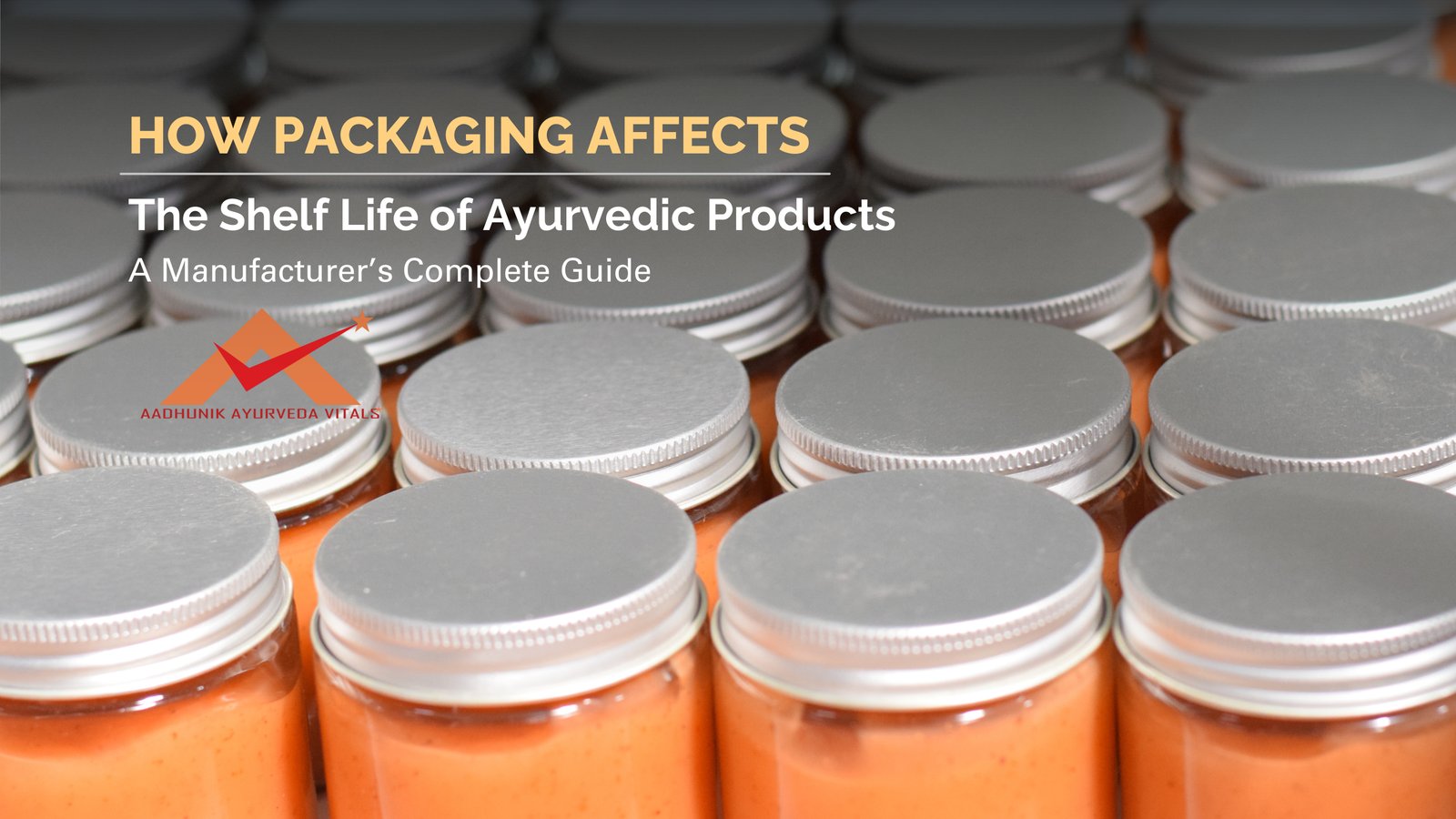
Table: Packaging Selection Based on Product Sensitivity
| Product Type | Packaging Recommendation | Primary Benefit |
|---|---|---|
| Vitamin C Serum | Amber Glass Dropper | UV protection |
| Essential Oils | Amber Glass Bottle | Prevents ingredient interaction |
| Herbal Hydrosols | Fine Mist Spray Bottle | Hygienic application |
| Face Cream | Glass Jar / Airless Pump | Stability & convenience |
| Herbal Shampoo | PET Flip-top Bottle | Easy dispensing |
| Body Lotion | Pump Bottle | Controlled usage |
| Body Butter | Wide-mouth Jar | Easy product access |
Eco-Friendly Packaging: The Growing Global Preference
Sustainability is no longer a niche trend, it has become a major purchasing factor for consumers worldwide. International buyers increasingly expect brands to reduce environmental impact through responsible packaging choices.
From a manufacturer's perspective, sustainable packaging involves balancing environmental responsibility with product protection. Simply replacing plastic with another material is not enough if it compromises product stability or increases breakage during transport.
At Aadhunik Ayurveda, we encourage brands to explore packaging options such as:
- Recyclable glass bottles
- Reusable containers
- Lightweight packaging to reduce transportation emissions
- Minimal secondary packaging
- FSC-certified paper cartons
- Eco-friendly labels and inks
The objective is to create packaging that protects both the formulation and the environment without compromising functionality.
Export Packaging: More Than Attractive Design
For brands planning international expansion, export packaging requires additional consideration beyond aesthetics. Products often travel thousands of kilometers under varying climatic conditions before reaching consumers.
A manufacturer must ensure that packaging can withstand:
- Long transportation durations
- Temperature fluctuations
- Humidity changes
- Repeated handling
- International shipping regulations
At Aadhunik Ayurveda, export packaging undergoes additional quality checks to minimize breakage, leakage, and product damage during transit. Proper secondary packaging, cushioning materials, tamper-evident seals, and durable outer cartons all contribute to successful global deliveries.
Luxury Packaging Creates Premium Brand Positioning
Consumers often associate premium packaging with premium quality. While formulation remains the heart of any cosmetic product, luxurious packaging enhances perceived value and influences purchasing decisions.
Luxury packaging can include:
- Frosted glass bottles
- Metallic collars
- Matte finishes
- Gold or silver printing
- Premium dropper assemblies
- Thick-walled jars
- Minimalist label design
At Aadhunik Ayurveda, we help brands choose packaging that aligns with their target market rather than simply following trends. A premium skincare line deserves elegant packaging that reflects the quality of its formulation while remaining practical for everyday use.
Packaging Customization: Turning Packaging into Brand Identity
In today's competitive beauty market, packaging is one of the strongest tools for brand differentiation. Two skincare products may contain equally effective formulations, but the product with premium, well-designed packaging often creates a stronger first impression and earns greater consumer trust. From a manufacturer's perspective, packaging customization is not simply about changing bottle colors or adding a logo—it is about creating a complete brand identity that reflects the product's positioning, target audience, and overall customer experience.
At Aadhunik Ayurveda, we work closely with brands to customize every aspect of their packaging. Whether the goal is to launch a luxury skincare line, an affordable herbal range, or an export-focused collection, packaging can be tailored to match the brand's vision while maintaining functionality and product safety.
Packaging customization may include:
- Custom bottle colors and finishes
- Screen printing or labeling options
- Premium caps, pumps, and droppers
- Matte, glossy, or frosted finishes
- Sustainable packaging materials
- Outer cartons and gift boxes
- Brand-specific typography and artwor
A customized packaging solution helps brands stand out on retail shelves while building stronger customer recognition and loyalty.
Packaging Should Match the Product Philosophy
One of the most common mistakes new brands make is selecting packaging based only on appearance. From a manufacturer's perspective, packaging should always reflect the philosophy of the product inside.
For example, an Ayurvedic herbal oil packaged in a bright neon-colored plastic bottle may create confusion among consumers looking for authenticity. On the other hand, a premium facial serum presented in an elegant frosted glass dropper bottle immediately communicates quality, sophistication, and care.
At Aadhunik Ayurveda, we help brands align packaging with product positioning by considering:
- Product category
- Target customer
- Brand identity
- Pricing segment
- Retail or export market
- Sustainability goals
This alignment ensures that the packaging tells the same story as the formulation itself.
Common Packaging Mistakes Brands Should Avoid
Packaging mistakes can increase production costs, reduce shelf life, create customer complaints, and negatively affect brand reputation. Many of these issues arise because packaging decisions are made without consulting the manufacturer during product development.
Some of the most common mistakes include:
- Choosing packaging based only on aesthetics.
- Ignoring formulation compatibility.
- Selecting low-quality pumps or closures.
- Using transparent bottles for light-sensitive formulations.
- Choosing oversized packaging that increases shipping costs.
- Ignoring export requirements.
- Using labels that peel or fade over time.
- Selecting packaging without stability testing.
At Aadhunik Ayurveda, every packaging recommendation is based on formulation performance, transportation conditions, and long-term product stability rather than appearance alone.
The Growing Trend of Sustainable Cosmetic Packaging
Consumers across global markets increasingly prefer brands that demonstrate environmental responsibility. Sustainable packaging is no longer viewed as an optional feature, it has become an important purchasing factor for many skincare consumers.
From a manufacturer's perspective, sustainability involves reducing environmental impact without compromising product protection or quality.
Current sustainable packaging trends include:
- Recyclable glass packaging
- PCR (Post-Consumer Recycled) plastics
- Minimal secondary packaging
- Refillable containers
- Paper-based protective inserts
- Biodegradable shipping materials
At Aadhunik Ayurveda, we encourage brands to adopt practical sustainability strategies that align with their market positioning and customer expectations while ensuring packaging remains durable and suitable for export.
Future Trends in Cosmetic Packaging
The cosmetic packaging industry continues to evolve alongside changes in consumer preferences and technology. Manufacturers are constantly exploring innovative solutions that improve product protection, user convenience, and environmental sustainability.
Some of the most significant packaging trends shaping the future include:
- Airless dispensing systems for sensitive formulations
- Refillable luxury packaging
- Smart packaging with QR codes for product authentication
- Lightweight glass for reduced transportation emissions
- PCR and bio-based plastics
- Minimalist premium packaging
- Tamper-evident closures
- Sustainable labeling materials
At Aadhunik Ayurveda, we continuously monitor global packaging innovations to help our partners launch products that remain competitive in both domestic and international markets.
Why Packaging Selection Begins with the Manufacturer
Many brands approach packaging suppliers after finalizing their formulation. However, experienced manufacturers understand that packaging selection should begin much earlier.
A manufacturer evaluates multiple factors simultaneously, including:
- Ingredient compatibility
- Filling equipment requirements
- Production efficiency
- Packaging availability
- Export regulations
- Consumer convenience
- Cost optimization
By involving the manufacturer from the beginning, brands avoid expensive redesigns, packaging failures, and production delays.
At Aadhunik Ayurveda, our packaging experts collaborate with formulation scientists and production teams to ensure that every packaging decision supports product quality and commercial success.
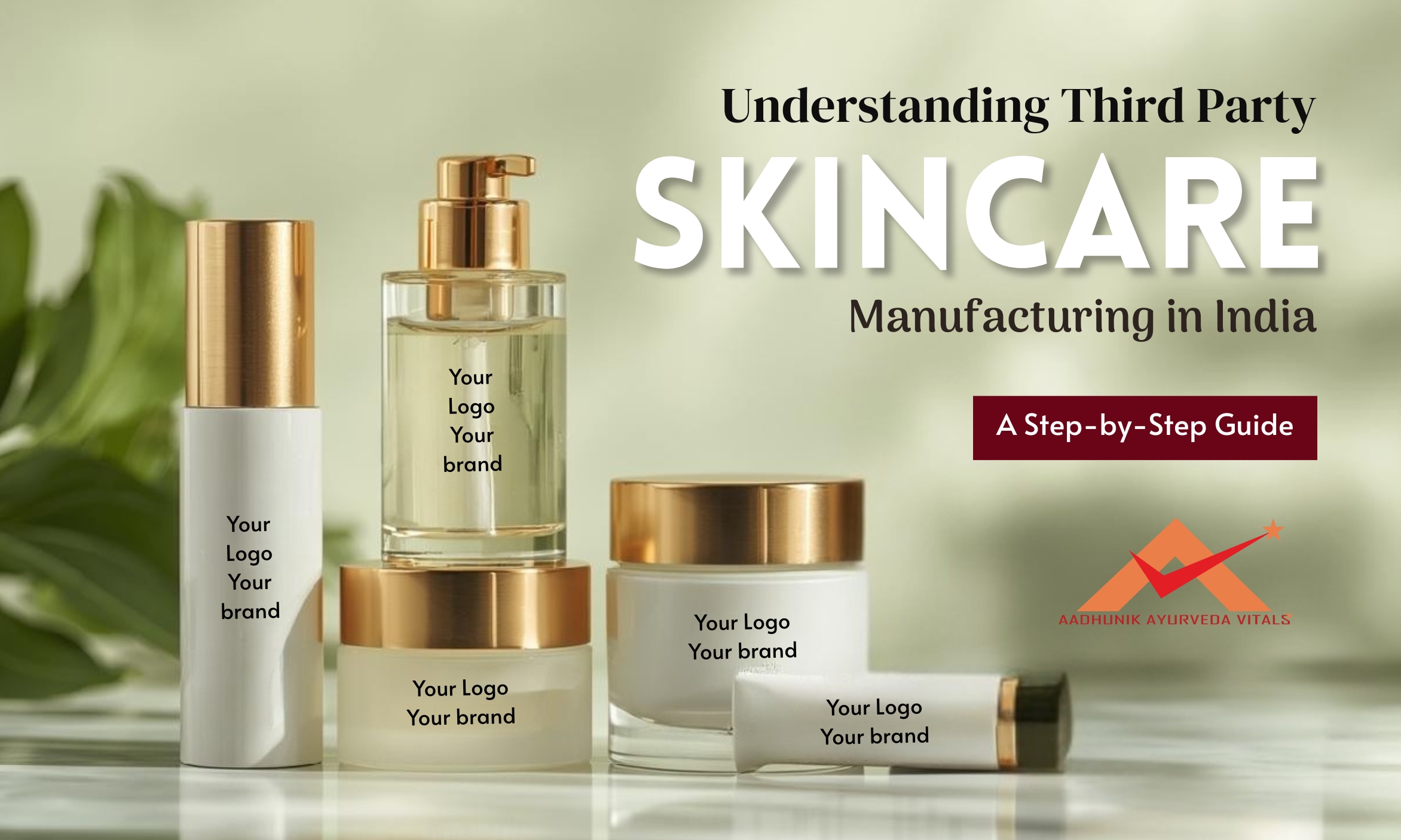
Packaging compatibility testing is only one part of the complete manufacturing process. Learn how formulation development, quality testing, packaging selection, and commercial production work together in our guide on Understanding Third Party Skincare Manufacturing in India: A Step-by-Step Guide.
Why Choose Aadhunik Ayurveda for Cosmetic Packaging Solutions
Packaging is not just about supplying bottles, it is about creating a complete packaging system that protects your formulation while strengthening your brand identity.
At Aadhunik Ayurveda, we provide end-to-end packaging support for Ayurvedic, herbal, skincare, haircare, wellness, and personal care brands.
Our packaging solutions include:
- Premium glass bottles
- Amber glass packaging
- Frosted luxury bottles
- Dropper bottles
- Pump bottles
- Spray bottles
- Cosmetic jars
- Airless packaging options
- Custom labeling and branding
- Export-ready packaging solutions
Every packaging recommendation is based on formulation compatibility, product stability, branding objectives, and market requirements, ensuring that brands receive packaging that is both visually appealing and technically reliable.
Conclusion
Packaging is one of the most overlooked yet influential aspects of cosmetic product development. While consumers often notice its appearance first, manufacturers understand that its true purpose extends far beyond aesthetics. The right packaging protects active ingredients, extends shelf life, enhances usability, reduces transportation risks, and communicates the quality of the brand.
From selecting the ideal bottle material to choosing the right dispensing system and ensuring compatibility with botanical formulations, every packaging decision contributes to the overall success of a product. As consumer expectations continue to evolve, brands that invest in thoughtful, functional, and sustainable packaging will be better positioned to build trust and achieve long-term growth.
At Aadhunik Ayurveda, we believe exceptional formulations deserve equally exceptional packaging. By combining technical expertise, premium packaging options, and deep manufacturing experience, we help brands create products that are protected, visually compelling, and ready for both domestic and global markets.
CTA
Create Premium Skincare Products with the Right Packaging Partner
Your formulation deserves packaging that protects its quality, enhances its appeal, and strengthens your brand.
Partner with Aadhunik Ayurveda for complete cosmetic packaging and manufacturing solutions designed for modern Ayurvedic and skincare brands
What We Offer
- Premium glass and luxury cosmetic packaging
- Customized packaging solutions
- Formulation and packaging compatibility testing
- Export-ready packaging support
- Sustainable packaging options
- Complete private label manufacturing services
Whether you're launching your first skincare product or expanding an existing brand, Aadhunik Ayurveda helps you choose packaging that combines functionality, stability, and premium presentation.
FAQs:
1. How does Aadhunik Ayurveda help brands choose the right packaging?
Our packaging selection process begins with understanding your formulation, target market, product viscosity, and branding goals. We recommend packaging that ensures stability, functionality, and premium presentation rather than simply focusing on appearance.
2. Does packaging really affect the shelf life of Ayurvedic skincare products?
Yes. Packaging directly influences exposure to oxygen, moisture, heat, and UV light. Choosing compatible bottles, jars, or pumps helps maintain formulation stability and extends product shelf life.
3. Which packaging material does Aadhunik Ayurveda recommend for premium skincare products?
The choice depends on the formulation, but premium glass bottles, amber glass containers, frosted glass packaging, and airless pumps are commonly recommended for high-value skincare products because they offer superior protection and a luxury appearance.
4. Can Aadhunik Ayurveda provide customized packaging for private label brands?
Absolutely. We offer customized bottles, jars, labels, closures, printing, and outer packaging to help brands create a unique market identity while ensuring manufacturing compatibility.
5. How do manufacturers test whether packaging is suitable for a formulation?
Before production, we perform packaging compatibility studies, stability testing, leakage testing, and storage evaluations to ensure the formulation remains safe, effective, and stable throughout its intended shelf life.
6. What should brands prioritize when selecting cosmetic packaging?
From a manufacturer's perspective, brands should prioritize formulation compatibility, product protection, dispensing convenience, transportation safety, and consumer experience before focusing on visual design.
7. Does Aadhunik Ayurveda support export-ready packaging?
Yes. We help brands select packaging suitable for international transportation, regulatory requirements, and long-distance shipping while maintaining product integrity and premium presentation.
8. Why should packaging decisions involve the manufacturer from the beginning?
Early collaboration allows manufacturers to evaluate compatibility, production efficiency, filling processes, stability requirements, and branding objectives. This reduces costly redesigns and ensures a smoother product launch.