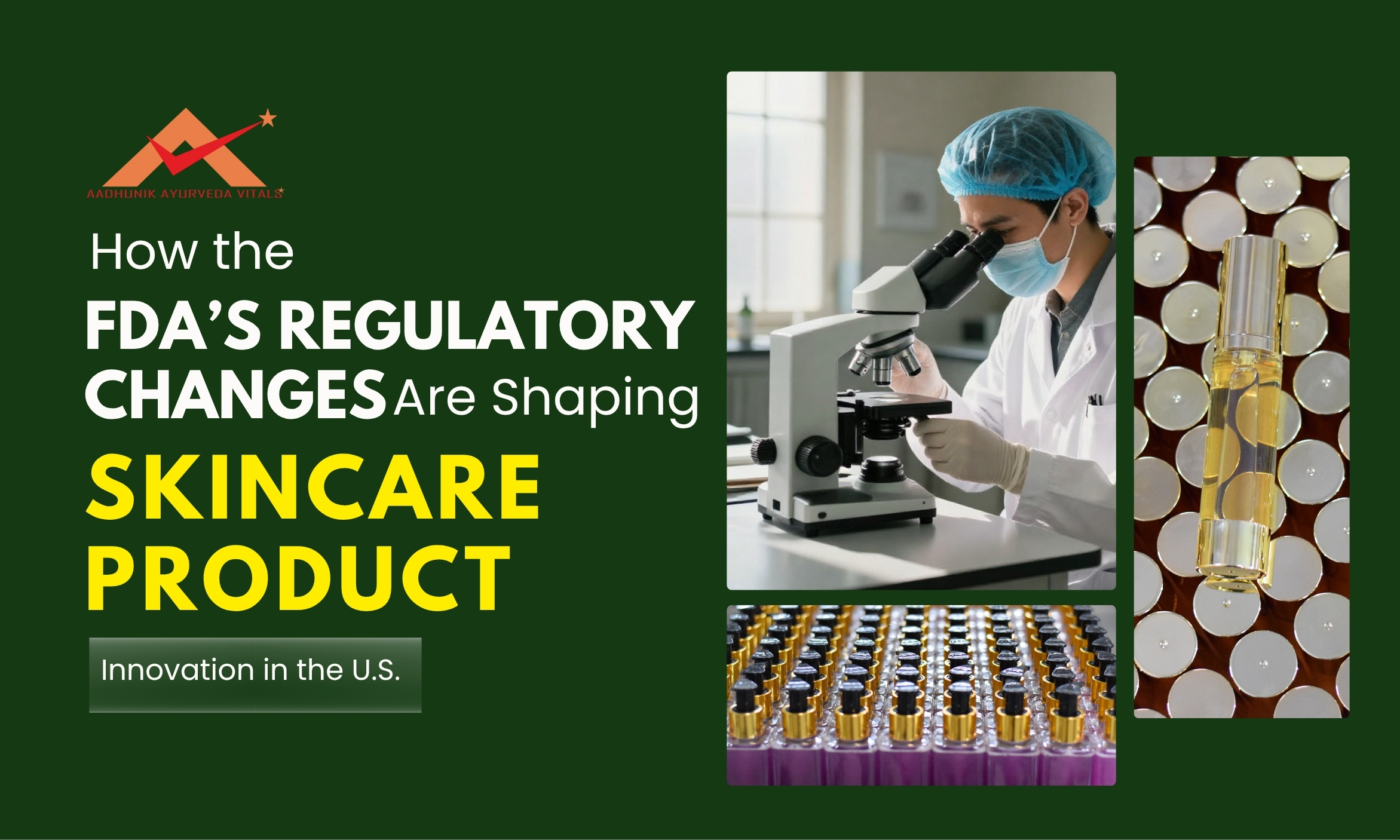
How the FDA’s Regulatory Changes Are Shaping Skincare Product Innovation in the U.S.
FDA Skincare Regulation Changes: An Overview of the Evolving U.S. Regulatory Environment |How MoCRA Is Changing Skincare Product Development |FDA Good Manufacturing Practices (GMPs) for Skincare | Clinical Testing Requirements & New FDA Cosmetic Rules | Ingredient Approvals and New Innovation Pathways Under FDA Regulations| Building Consumer Trust Through Compliance, Labeling, Safety, and Transparency|The U.S. skincare industry is at a pivotal moment as the Food and Drug Administration (FDA) modernizes regulations, reshaping how products are developed, tested, and brought to market. For manufacturers like us at Aadhunik Ayurveda , understanding these shifts isn’t just compliance; it’s a competitive advantage. FDA skincare regulation changes are creating new opportunities for brands to innovate responsibly while proving product safety and efficacy in ways never done before.
As a trusted Private Label Skincare Manufacturer, Cosmetic Product Manufacturer, and FDA-compliant skincare manufacturing partner, Aadhunik Ayurveda closely monitors evolving U.S. cosmetic regulations to help brands develop innovative, compliant, and market-ready skincare products.
These updates are driving better industry practices, accelerating insights into ingredients, and encouraging high standards for clinical evaluation. Today, more than ever, brands that align product innovation with regulatory clarity can build stronger consumer trust, reduce risk, and stand out in a crowded market.
Key takeaways from today’s regulatory environment:
- New regulatory frameworks are reshaping innovation pathways
- Emphasis on safety substantiation and quality manufacturing
- Clinical testing integration into modern product development
The latest FDA skincare regulation changes, MoCRA compliance requirements, FDA cosmetic regulations, and Good Manufacturing Practices (GMP) for cosmetics are encouraging manufacturers to prioritize safety, transparency, and evidence-based skincare innovation.
FDA Skincare Regulation Changes: An Overview of the Evolving U.S. Regulatory Environment
FDA skincare regulation changes stem largely from the Modernization of Cosmetics Regulation Act of 2022 (MoCRA), which marks the biggest update to cosmetic law since 1938. Under MoCRA, the FDA now has enhanced authority to govern safety reporting, facility registration, product listing, and the development of enforceable manufacturing standards.
For manufacturers, these changes mean a shift from previously voluntary best practices to mandatory compliance systems that elevate product accountability. Whereas historically cosmetics were lightly regulated compared to drugs, this new framework brings skincare products closer to a safety-centric approach that thrives on documented scientific substantiation.
What this means for the skincare industry:
- Manufacturers must anticipate more robust regulatory oversight
- Safety substantiation becomes a strategic part of product development
- Facilities and products now face structured FDA expectations
Why this matters for product innovation:
- Safety records and adverse event reporting improve consumer confidence
- Products are documented with ingredient transparency
- Innovation is grounded in scientific evidence, not just marketing
For every Private Label Cosmetic Manufacturer, understanding FDA cosmetic compliance, product registration requirements, safety substantiation, and manufacturing documentation is becoming essential for successful entry into the U.S. skincare market.
How MoCRA Is Changing Skincare Product Development
How MoCRA is changing skincare product development begins with the very definition of responsibility for product safety. Under MoCRA, the manufacturer, packer, or distributor (the “responsible person”) must ensure that each cosmetic product marketed in the U.S. is safe and supported by scientific substantiation.
MoCRA introduces several new regulatory obligations:
- Facility registration and product listing
- Adverse event reporting within specified timelines
- Safety substantiation documentation
- Record keeping and potential FDA facility access
These frameworks require manufacturers not only to follow robust internal quality controls but also to document and maintain evidence that products are designed and tested for consumer safety. This shift empowers manufacturers who invest in R&D and build safety data into their innovation pipelines.
Key areas where MoCRA impacts development:
- Safety and efficacy become measurable objectives, not optional exercises
- Risk assessment and substantiation are embedded early in R&D
- Regulatory readiness becomes part of product strategy
Specific strategic impacts on innovation:
- Encourages the use of validated scientific methodologies
- Promotes transparent ingredient profiles
- Aligns formulation decisions with documented safety goals
The implementation of MoCRA compliance is encouraging manufacturers to integrate regulatory planning into skincare product development, making safety documentation and scientific substantiation integral parts of the formulation process.
FDA Good Manufacturing Practices (GMPs) for Skincare
A significant part of the FDA’s regulatory changes involves formalizing FDA Good Manufacturing Practices (GMPs) for skincare products. Previously, cosmetic GMPs were recommended best practices. MoCRA now requires the FDA to issue enforceable GMP regulations for cosmetic manufacturers and processors.
These GMP standards are intended to ensure consistent quality, minimize contamination, and verify that products meet their intended performance attributes. GMPs cover aspects like raw material sourcing, in-process controls, finished product testing, documentation practices, and facilities infrastructure.
For a manufacturer, adopting GMPs means investing in documented quality systems that support product reliability across batches and time.
How quality systems strengthen innovation:
- Standardized processes reduce risk and boost reputation
- Quality consistency is essential for reliable clinical outcomes
- GMP compliance helps in regulatory inspections and market access
Benefits of adhering to FDA GMPs:
- Improved product reliability and stability
- Streamlined internal operations and traceability
- Stronger defense against compliance risks
Adopting FDA Good Manufacturing Practices (GMPs) strengthens quality assurance, manufacturing consistency, documentation accuracy, and overall cosmetic manufacturing compliance for brands serving the U.S. market.

Clinical Testing Requirements & New FDA Cosmetic Rules
Though the FDA does not mandate pre-market approval of cosmetic products or ingredients (except color additives), the modernization of regulations has intensified industry expectations for clinical testing requirements and new FDA cosmetic rules. These are not direct FDA mandates for clinical trials per se, but MoCRA’s safety substantiation requirements mean brands must align with robust scientific evidence, including clinical data, supporting product safety and claims.
Clinical testing, ranging from human patch tests to controlled usage studies, has become a differentiator in product innovation. It empowers brands to validate performance claims like hydration, irritation reduction, anti-aging benefits, and more.
Key ways clinical testing influences innovation:
- Demonstrates safety and efficacy to regulators and consumers
- Helps justify verified marketing claims
- Enhances product credibility in competitive markets
Clinical insights that elevate product value:
- Consumer preference drivers (e.g., sensitivity-friendly formulations)
- Technology validation (like time-release or cooling mechanisms)
- Performance substantiation for specific demographics
Growing emphasis on clinical testing for skincare products, consumer safety studies, and scientific validation enables manufacturers to support product claims with credible evidence while improving regulatory readiness.
Ingredient Approvals and New Innovation Pathways Under FDA Regulations
One of the most exciting consequences of the latest FDA skincare regulation changes is the acceleration of data-driven ingredient evaluation. While the FDA does not require pre-approval for most ingredients, the new framework encourages substantiation of safety backed by robust scientific assessment.
Products today often benefit from advanced ingredient technologies, such as natural actives, biotechnology-derived molecules, antioxidants, peptides, and delivery systems that require well-documented safety profiles. Manufacturers who invest in validated research and transparent ingredient disclosures find themselves better positioned in the U.S. market.
Innovation pathways opened by regulation:
- Use of modern ingredient delivery systems confirmed by evidence
- Adoption of safer alternatives with substantiated claims
- Increased alignment with global standards and expectations
Why ingredient innovation matters now:
- Consumers increasingly demand evidence-based formulation benefits
- Regulatory frameworks reward transparency and science
- Documented safety is a strategic asset in brand storytelling
Innovation increasingly depends on selecting ingredients supported by robust safety assessments, transparent documentation, and compatibility with evolving FDA cosmetic regulations and international quality standards.
Building Consumer Trust Through Compliance, Labeling, Safety, and Transparency
In today’s marketplace, transparency is not optional. With the FDA’s expanded authority under MoCRA, including adverse event reporting and product listing requirements, brands must promote transparent safety and labeling practices.
For example, MoCRA requires cosmetic facilities to register and establishes systems for ongoing product listing updates, including ingredient details and responsible contact information. These disclosures allow consumers and the FDA to track product safety events and ensure compliance.
Brands that embrace these requirements as opportunities rather than burdens gain trust among regulators, retailers, and consumers.
Consumer–brand trust benefits include:
- Clear, informative labeling
- Responsive safety reporting systems
- Operational transparency about production practices
How transparency supports innovation:
- Educates consumers about product benefits
- Reduces misinformation in the market
- Builds brand loyalty through honesty
Clear labeling, accurate ingredient disclosure, and FDA cosmetic labeling compliance help brands strengthen consumer confidence while demonstrating commitment to product safety and regulatory transparency.
How Regulatory Shifts Are Supporting Advanced Testing and Safety Systems
The FDA’s modernization efforts are not just regulations; they’re catalysts for innovation. By requiring safety substantiation and encouraging systematic documentation, these changes prompt manufacturers to adopt scientific best practices traditionally seen in drug development.
For example, more advanced safety evaluation techniques, such as in-vitro skin compatibility tests, patch testing, and consumer usage trials, become part of the product development lifecycle. These methods can generate high-quality data that support safer, more predictable outcomes.
Innovation benefits of enhanced safety systems:
- Deeper understanding of formulation performance
- Reduced product risk and consumer dissatisfaction
- More predictable regulatory and market acceptance
Safety systems that elevate innovation:
- Structured safety study protocols
- Post-market monitoring and feedback loops
- Defined risk mitigation strategies
Manufacturers investing in advanced cosmetic testing, quality assurance systems, and risk-based product evaluation are better equipped to develop innovative skincare products that meet both regulatory and consumer expectations.

Future Outlook on Innovation in the U.S. Skincare Market
As regulatory frameworks evolve, so will skincare product innovation in the United States. The FDA’s modernization efforts, particularly through MoCRA, pave the way for deeper scientific engagement in product conception and commercialization.
Innovation in 2026 and beyond will center around evidence-based technologies, advanced delivery systems, safer ingredient profiles, and sophisticated consumer insights that align with regulatory expectations and market demand. Brands that embed compliance into their innovation DNA will likely lead the market.
Future innovation pillars may include:
- AI-driven formulation optimization
- Personalized skincare backed by clinical data
- Sustainable and safety-verified ingredient portfolios
Regulatory alignment as innovation fuel:
- Encourages scientific rigor in product claims
- Creates standardized frameworks for quality assurance
- Drives consumer confidence and adoption
Future-focused private label skincare manufacturers will continue integrating artificial intelligence, biotechnology, sustainability, and regulatory science to develop compliant, high-performance skincare products for global markets.
Conclusion
The ongoing FDA skincare regulation changes are reshaping how skincare products are developed, manufactured, and marketed in the U.S. From MoCRA’s expanded oversight to future GMP standards and enhanced safety substantiation, brands and manufacturers must adapt strategically. For manufacturers like Aadhunik Ayurveda, these regulatory advancements are not roadblocks; they are catalysts for innovation, quality, and consumer trust.
By aligning product development with modern regulatory expectations, skincare businesses can deliver safer, more effective, and scientifically substantiated products that resonate with consumers and comply with evolving U.S. standards.
Brands partnering with an experienced Private Label Skincare Manufacturer that understands MoCRA compliance, FDA cosmetic regulations, GMP manufacturing, and clinical skincare testing will be better positioned to launch innovative, compliant, and consumer-focused products in the evolving U.S. skincare industry.
FAQs:
1.What are the key recent FDA changes affecting skincare products?
The FDA’s modernization efforts, like MoCRA, require facility registration, product listing, safety substantiation, and forthcoming GMP rules.
2. Do new FDA rules require clinical testing for all skincare products?
While the FDA doesn’t mandate clinical trials for all cosmetics, new safety substantiation expectations encourage robust testing and evidence.
3. What are FDA Good Manufacturing Practices (GMPs)?
GMPs ensure consistent quality and safe manufacturing processes and will become enforceable under MoCRA by 2025.
4. How do regulatory changes affect product labeling?
FDA guidelines now require clearer ingredient lists, contact info for reporting adverse events, and allergen disclosures.
5. Why do brands need to maintain safety substantiation records?
Safety data help prove product safety, support claims, and demonstrate compliance during inspections.
6. How do these regulatory changes support skincare innovation?
By encouraging scientific evidence, transparent practices, and quality manufacturing, the FDA’s framework fosters safer, more effective products.
7. How do rising tariffs (100%–500%) influence skincare product innovation in the U.S.?
Rising tariffs push manufacturers to rethink ingredient sourcing and formulation strategies. To manage cost pressures, U.S. skincare manufacturers are increasingly focusing on locally approved ingredients, diversified global sourcing, and innovation-driven formulations that comply with FDA modernization and MoCRA requirements without compromising product quality.
8. Can geographical diversification help U.S. skincare brands manage tariff-related risks?
Yes. Geographical diversification allows manufacturers to source raw materials from multiple regions, reducing dependency on any single country. This strategy supports supply chain stability, faster ingredient approvals, and smoother compliance with evolving FDA cosmetic regulations, even amid significant tariff increases.
9. How do FDA regulatory changes support manufacturers during high-tariff scenarios?
FDA modernization efforts and MoCRA-driven updates encourage transparent sourcing, GMP-compliant manufacturing, and science-backed ingredient validation.These changes enable manufacturers to adapt formulations, explore alternative ingredients, and maintain momentum in innovation despite rising import tariffs.
10. How can private label skincare brands prepare for future FDA regulatory changes?
Private label skincare brands should work closely with experienced manufacturers that monitor evolving FDA cosmetic regulations, maintain comprehensive documentation, implement Good Manufacturing Practices (GMP), and conduct appropriate safety and stability testing to ensure long-term regulatory compliance.
11. Why is MoCRA compliance important for skincare manufacturers and brand owners?
MoCRA compliance helps manufacturers and skincare brands strengthen product safety, improve regulatory readiness, maintain accurate documentation, enhance consumer trust, and support successful commercialization in the U.S. cosmetic market while meeting evolving FDA expectations.